How Pool One and AWK Aim to Redefine Outdoor Advertising
Outdoor ad budgets are under pressure. Pool One and AWK are joining forces to expand their reach. Markus Stahmer explains how digital formats and AI are changing the market.


Search referrals to publisher sites have plunged from 70% to under 20% in three years. John Nardone says this is a permanent shift. Publishers must now adapt to new distribution realities.
AI-driven content requests are forcing publishers to balance discovery with paywall protection. New platforms and payment systems are emerging to address these challenges, while video and metadata strategies evolve.
Twenty US video production roles are being cut as AP shifts work to India. Union leaders warn of risks to coverage quality. Additional layoffs in photo and London video teams are planned.
Publishers are adapting video strategies as audiences shift to new platforms. Joe Pickover explains why tailored formats, live coverage, and data-driven decisions are now essential. AI and platform fragmentation are reshaping newsroom workflows.
A major funding round has pushed Higgsfield’s valuation to $5.4 billion. The AI video platform now claims 30 million users and $700 million in annualized revenue. Its tools are gaining traction with Fortune 500 enterprises.
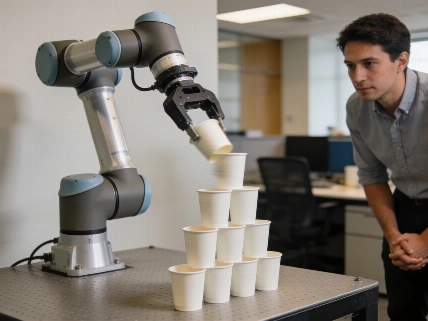
Robots at Generalist AI can master physical tasks after watching short videos, adapting on the fly without prior training. Their improvisation hints at a leap toward real-world use, though reliability remains a challenge.
Fact-checkers at India Today use Backstory to quickly verify images. The tool automates provenance checks and context tracing. Google DeepMind is gathering feedback from journalists to improve accuracy.
Google has ended a brief test of AI-generated images in recipe summaries in Search. The move follows criticism from creators who raised concerns about confusion and lost traffic. Google clarified that the experiment was separate from its Nano Banana feature.
Many AI-generated visuals share a similar style, making it hard for brands to differentiate. Experts say the key is not longer prompts, but a clear visual identity, reference images, and the right tools.
A children’s magazine brand is getting a digital makeover. Burda is turning "Lissy Pony" into a multilingual video series using generative AI. The first episodes will launch on YouTube this fall.
Indian publisher NDTV is investing in AI tools that enhance newsroom workflows and audience products. The company prioritizes building unique software and data layers over relying solely on generic AI models. Editorial teams remain central to the process.
A small group of users is seeing new options under the Google search box, including create images, ask about files, and brainstorm. Google says the buttons are designed to highlight AI-powered features and do not affect core search functionality.
Disney is partnering with TikTok to let creators use its characters for new content. The move follows a brief deal with Open AI's Sora. The goal: engage fans while protecting Disney's IP.
Immersive drone shows are coming to U.S. cities as Stellantis partners with Nova Sky Stories. The collaboration brings branded aerial experiences to live audiences and digital fans. Automotive marketing meets large-scale drone art.
Dozens of explicit AI-generated child sexual abuse ads ran on Meta’s platforms, reaching thousands before removal. Researchers say Meta’s review process failed to block the content. The company claims new AI tools are improving detection.
AI-generated video ads are now meeting brand standards. Cuisinart tested Amazon’s new creative agent and saw promising results. The company plans to expand its use for future campaigns.
AI-made videos will no longer be recommended in Snapchat's Spotlight. The platform aims to highlight content from real people. Other social apps are also rethinking their approach to AI content.
A new AI feature in Google Earth now lets users create fabricated satellite images. Media professionals warn this tool could be used to spread disinformation. The update has immediate implications for newsrooms and OSINT analysts.
AI-generated media is challenging newsroom verification. Many authentication tools lack direct journalist input. New research highlights gaps in current solutions and urges more collaboration.
Major social platforms are tightening controls on AI-generated posts. New measures target spam, fake accounts and low-value videos. Creators face stricter rules and new verification steps.
A small nation is investing heavily to become a regional AI compute hub. Armenia’s $500 million Firebird project will host thousands of NVIDIA Blackwell GPUs, aiming to secure sovereign access to advanced AI infrastructure. Political and technical hurdles remain.
AI-powered creative tools enabled HelloFresh to launch a Times Square ad in a single day. The campaign highlights how brands can rapidly scale and test marketing assets using automation.
A new investigation reveals that most top image editing models on Hugging Face can generate nonconsensual sexual deepfakes. Researchers found the majority of user prompts aimed to undress or sexualize images, raising urgent moderation concerns.
Developers can now use Runway Media Router to automatically select the best generative model for images, video, or audio. The tool aims to simplify integration and optimize for quality, speed, or cost.
Longtime creators are leaving as AI-generated art and drop-shipping listings crowd out original handmade goods. New competitors are emerging with stricter policies. Etsy’s recent rule changes and enforcement gaps are fueling the exodus.
AI-powered insights are helping Corcoran Group focus ad spend on what works. The company now analyzes creative and performance data together to reduce wasted budget. New tools reveal which campaigns drive real results.
A Kazakh AI startup has reached a $1.3 billion valuation, marking a milestone for Central Asia’s tech scene. Venture capital investment in the region hit $320 million in 2025, with Kazakhstan and Uzbekistan leading the surge.
San Francisco’s city attorney has demanded that Apple and Google remove 13 AI-powered apps that generate nonconsensual nude images. The move highlights growing pressure on tech giants to address explicit deepfake content and protect users.
Major private equity firms are making bold moves in ecommerce. TikTok Shop’s new AI-generated shoppable videos are dividing brands and creators. The stakes for online commerce and affiliate marketing are rising.