
AI-generated video ads are now meeting brand standards. Cuisinart tested Amazon’s new creative agent and saw promising results. The company plans to expand its use for future campaigns.
For content and marketing teams seeking faster, more flexible ad production, Cuisinart’s recent test of Amazon’s generative AI video creative agent offers a glimpse of what’s possible as AI tools mature. The company’s marketing leaders reported that, until recently, AI-generated creative often failed to meet brand requirements-colors, logos, and product details were frequently off, even in static banners. But with rapid improvements in video quality, Cuisinart decided to participate as a beta tester for Amazon’s new video creative agent, which launched this year.
According to Kelsey Smithuysen, Amazon marketing director for Conair (Cuisinart’s parent company), generative creative is especially valuable for Amazon’s marketing team, which must adapt quickly to shifting product priorities. While Cuisinart’s brand team typically plans campaigns months in advance, Amazon’s retail environment demands rapid creative changes. This makes AI-generated content a practical solution for keeping pace with evolving needs.
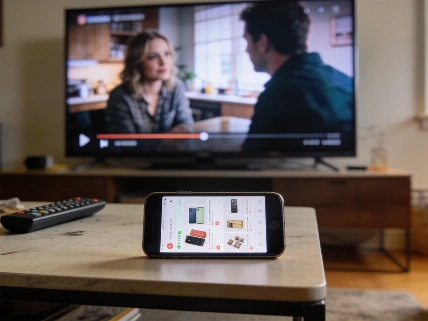
During the beta, Cuisinart and its agency, Global Overview, ran a controlled test: they allocated equal budgets to an in-house produced video and an AI-generated video from Amazon’s agent, launching identical campaigns for one month. The AI video was selected and fine-tuned from several options proposed by the tool. Results favored the AI-generated creative, which performed well in terms of click-through and conversion rates.
Nikhil Nanivadekar, Amazon Ads principal engineer for generative AI and agentic AI, explained that the creative agent builds on past brand campaigns, analyzing which ads have performed best and generating new content grounded in those signals. Rather than inventing radically new concepts, the AI produces fresh material similar to proven winners, helping brands avoid ad fatigue among shoppers who have seen the same creative repeatedly.
Smithuysen noted that the pace of improvement in AI-generated content has been striking. Just a year ago, static image generation was unreliable. Now, the AI can deliver nearly complete video ads, requiring only minor post-production tweaks and initial configuration. She said that if progress continues, Cuisinart may soon use AI-generated videos with minimal human intervention.
Looking ahead, Cuisinart aims to accelerate production and expand the creative range of its AI-generated videos. The successful test video was basic-a family in a kitchen, a narrator discussing last-minute meal prep, and product shots of the 14-cup food processor. While some visual details, like buttons and text, were slightly off, the overall result was effective and usable.
The brand is also exploring more commercial-style use cases, such as targeting ads based on life events like moving or starting college. Smithuysen said that as generative video quality improves, AI-generated people in ads may eventually hold conversations, but for now, a narrator-led approach remains safer.
Currently, Amazon’s generative ads are limited to its own platform and cannot be reused on YouTube, Instagram, Walmart, or other channels. Smithuysen argued that this is not a drawback, since platform-specific creative can better match each audience’s preferences. She suggested that as AI tools evolve, Cuisinart’s ads may look different across platforms, reflecting the unique capabilities of each technology.
Amazon Ads is working to streamline the creative process further. In June, the company introduced a “one-click video generation” feature, aiming to reduce the need for ongoing prompts and make campaign launches even faster. Nanivadekar said the goal is to let advertisers generate effective videos with minimal effort, based on real-time feedback from the creative agent.
As brands experiment with AI-driven creative, the challenge of adapting to shifting audience behaviors remains. For example, recent analysis has highlighted that audience declines in publishing are not solely due to AI or search changes, but reflect deeper, more complex issues-a point explored in a recent report on the evolving audience crisis.
Conair, the parent company of Cuisinart, is a privately held consumer products company founded in 1959. Cuisinart, acquired by Conair in 1989, is a well-known kitchen appliance brand in the United States, with its food processors and small appliances sold through major retailers and online platforms. The company’s ongoing investment in AI-driven marketing reflects a broader push to modernize its advertising and reach new audiences in a competitive market.