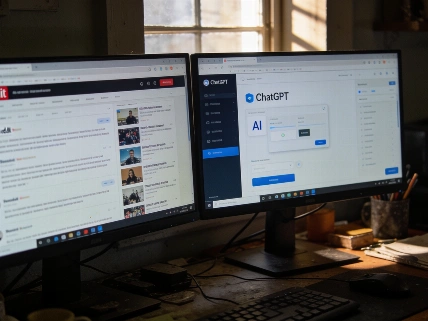

Audience declines are not just about AI or search changes. Richard J. Tofel points to a quieter, more complex challenge for news publishers. Many hesitate to address this underlying issue. The real impact may be bigger than traffic numbers suggest.
News publishers are increasingly concerned about more than just the immediate effects of AI and search engine changes on their audience numbers. According to Richard J. Tofel, while the impact of AI and evolving search platforms is real, it is only part of a larger, less visible crisis that many in the industry are hesitant to discuss openly. This underlying issue, he suggests, is not receiving the attention or analysis it deserves, even as it shapes the future of news consumption and business models.
Tofel argues that the current narrative around AI and search is relatively straightforward: these changes are primarily reducing peripheral, lower-value traffic. Publishers who relied heavily on this type of audience are feeling the effects most acutely. However, he notes that this is more of a business challenge for publishers than a societal loss, since such commoditized traffic was never central to the democratic function of news. The real concern, he says, would arise if search transformations eventually lead most people to get their news directly from chatbots or AI agents, fundamentally altering how audiences engage with journalism. For now, Tofel believes it is too early to say with certainty that this shift is inevitable.
Many publishers are reluctant to confront or even acknowledge the deeper crisis in audience engagement. This reluctance may stem from uncertainty about how to address the problem or from fear of drawing attention to vulnerabilities in their business models. The lack of open discussion and careful analysis means that potential solutions remain unexplored, and the industry risks missing opportunities to adapt before the situation worsens.
These concerns echo broader challenges in the news industry, where leaders often struggle to communicate their impact to different stakeholders. For example, some publishers have found it difficult to translate their results for funders, boards, or communities, as discussed in a recent report on newsroom impact communication. This highlights the complexity of audience relationships and the need for more transparent strategies.