
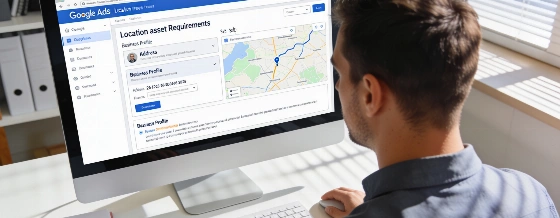
Google has updated its instructions for setting up business location assets in Google Ads. The rules themselves haven’t changed, but advertisers now get clearer, step-by-step troubleshooting guidance.
Google has revised its Location asset guidelines, but not by tightening enforcement or adding new penalties. Instead, the company has focused on making its instructions clearer and more practical for advertisers who run ads linked to physical business locations.
In September 2026, Google Business Profile introduced a fifth verification method, allowing businesses to confirm their location by submitting a photo of their storefront.
Location assets let businesses show their address, phone number, hours, and ratings directly in Google Ads. This information comes from the advertiser’s Google Business Profile, not from Google Ads itself. All business details and location images must be managed through Google Business Profile. This setup can be tricky for advertisers in regions where Business Profile isn’t available yet.
Over the past year, Google has made several adjustments to its Location asset requirements. The company now makes it clear that these updates are about making things easier to understand, not about stricter enforcement. Advertisers who have had trouble with asset rejections or incomplete listings will find more troubleshooting help, but the rules themselves haven’t changed.
According to a September 2026 MediaPost report, Google continues to require a minimum of approximately 300,000 store visits over 90 days and more than 500,000 aggregate account-level ad interactions in the same period for Local/Store advertising. Store-visit reporting in some scenarios is directly tied to the use of location assets.
Recent changes across Google’s ad platforms show a push for more transparency. This is similar to earlier moves, like the change in AdSense impression counting, which also focused on clarifying processes rather than rewriting the rules.
What’s notable in this update is that Google hasn’t added new enforcement tools. Instead, the company is betting that clearer instructions will help advertisers avoid mistakes. Marketers now have a better chance of staying compliant without surprises. However, the ongoing reliance on Google Business Profile-and its limited availability in some regions-remains a sticking point. Until that changes, advertisers will need to use the new guidance carefully to keep their local ad campaigns running smoothly.
Google, founded in 1998, leads the global digital advertising market, earning over $250 billion in annual ad revenue as of 2025. Google Ads and Google Business Profile are used by millions of businesses worldwide, with the company’s ad platforms making up more than 28% of global digital ad spend. The Location asset feature, introduced in 2013, is now standard for local businesses looking for visibility in search and maps.