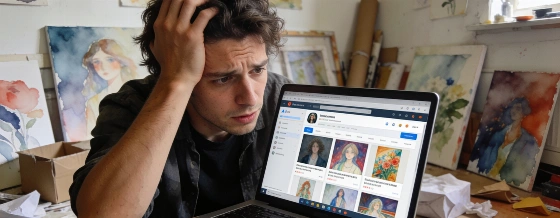
Longtime creators are leaving as AI-generated art and drop-shipping listings crowd out original handmade goods. New competitors are emerging with stricter policies. Etsy’s recent rule changes and enforcement gaps are fueling the exodus.
Emily Olson, a watercolor artist from Boulder, Colorado, built a thriving Etsy business selling custom pet portraits, earning over $40,000 in 2021. But by 2022, her sales began to plummet as the platform became saturated with AI-generated art and drop-shipped copies of her work, often sold at much lower prices. Olson discovered her original designs being marketed as unique on sites like Alibaba, while AI-generated pet portraits started dominating Etsy’s search results and winning positive reviews from buyers unaware of their origins.
By 2022, Olson’s Etsy sales had dropped 30 percent, and the following year, they fell by half. In 2024, Etsy formally announced it would continue to allow AI-generated art, provided sellers disclosed its use. Frustrated by declining sales and what she saw as Etsy’s prioritization of profit over creators, Olson posted a YouTube video in January 2025 titled: “Etsy Was Great … Until It Wasn’t-Why I’m Walking Away.” She explained, “Etsy doesn’t align with my values these days. It feels like they’ve just become another giant corporation chasing profits above all else.”
Olson is not alone. Many longtime Etsy sellers are leaving the platform, citing lax enforcement of policies around AI-generated content and drop-shipping. New marketplaces are emerging to fill the gap. Fybe, launching August 1, will ban both AI-generated products and drop-shipping, relying on volunteer moderators and direct communication with sellers to ensure authenticity. Fybe founder Rachel Powell said, “If we could start a platform that has human moderation and only allows vendors that aren’t using AI or using drop-shipping, then we could be filling a very real need in the community.”
On the r/EtsyCommunity subreddit, sellers voice frustration over declining sales and the proliferation of what one user called “AI-generated slop.” Complaints range from mass-produced mugs and T-shirts to AI-generated listings for crochet patterns and even medieval armor. Many vendors say the platform’s original focus on handcrafted goods is being eroded by entrepreneurs promoting AI-driven side hustles.
Chloe Rose, an artist and content creator, said, “The whole AI side of things has really, really hampered Etsy for sellers, big time.” Viktor, a UK-based illustrator with a decade on Etsy, reported a 98 percent drop in sales over the past year, blaming the influx of low-effort, AI-generated listings. “People have learned not to trust once-trusted sites like Etsy, because they are tired of seeing AI slop that is now infecting the site,” Viktor said.
Etsy’s gross merchandise sales began declining in 2021, though the company recently reported consecutive quarters of growth. In late 2023, Etsy laid off 11 percent of its workforce. Despite these challenges, Etsy still counts about 5.6 million sellers and reported $2.8 billion in revenue last year, a 2.7 percent increase from 2024.
Under Etsy’s 2024 policy, sellers must disclose if they use AI in product listings, and are prohibited from selling custom AI prompts or using AI to mislead buyers. However, enforcement remains inconsistent, and many sellers report that complaints about AI content go unanswered. Olson said Etsy even flagged her original artwork as potential copies, and her attempts to reach customer service were unsuccessful. “They are not easy to work with, at all,” she said.
James Ossman, Etsy’s vice president of customer operations, told WIRED the company recognizes “how deeply our sellers care about protecting human creativity.” He said Etsy is “continuing to improve our ability to detect and remove listings that don't belong on Etsy,” but acknowledged that enforcing transparency and AI standards is complex and ongoing.
Olson has since moved her business to Shopify, though she notes that selling independently is more challenging than operating within a large marketplace. She questions whether there is a sustainable future for handmade art as AI-generated products become cheaper and more accessible. “Face it, art is a luxury, and with all this economic uncertainty right now, it tends to be one of the last things people want to spend money on,” Olson said. Still, she believes there will always be demand for authentic, human-made creations.
According to Etsy’s 2025 transparency report, the platform remains one of the largest online marketplaces for handmade and vintage goods, with millions of active sellers and buyers worldwide. The company’s ongoing adjustments to its AI and drop-shipping policies continue to shape the competitive landscape for independent creators and new entrants like Fybe.