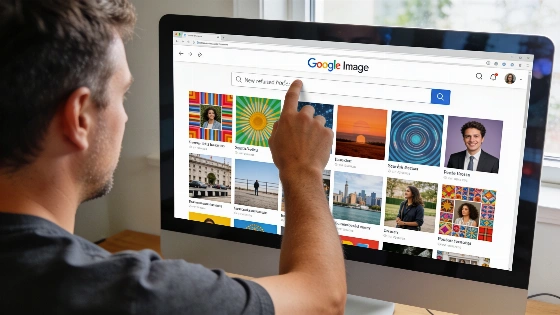
Google has ended a short-lived experiment that added AI-generated images to recipe summaries in Search AI Overviews. Robby Stein, Google’s Vice President of Product, confirmed the decision on X: “This was a small experiment we’re no longer running.” The test aimed to illustrate cooking steps directly in search results with generated visuals, rather than photographs supplied by the cited recipe publisher.
The feature drew criticism from food creators and publishers. Inspired Taste warned that users could mistake Google-generated illustrations for images from linked recipe websites, calling the presentation “very confusing and extremely oversimplified.” The concern went beyond attribution: visual summaries could also draw attention away from publishers’ original pages, where recipe developers share tested instructions, photography and other work.
Screenshots of the test showed generated images alongside sequential recipe instructions, from preparation through completion. Google described the rollout as a small experiment limited to a subset of users. The images were created for the search experience, not taken from the cited publishers’ original assets, raising questions about whether users could tell who produced them.
Stein said the recipe test was unrelated to Nano Banana, Google’s image-generation and editing capability, which creates or modifies images in response to user requests. The distinction separates a visual displayed automatically inside a search answer from image generation initiated by a user. The recipe experiment has ended; the separate user-requested tools remain available.
Adam of Inspired Taste welcomed the rollback, saying, “We are extremely happy to hear that this experiment is no longer running.” The decision followed criticism from creators, but the broader debate continues over how search products summarize publisher material while making its origins clear and directing users to the people who created it.
Those concerns are part of a wider challenge around AI-generated cooking content: convincing images and instructions can circulate even when a human recipe developer has not prepared or validated a recipe. In a later report, The Washington Times quoted a recipe creator saying it was “getting increasingly difficult to tease out what's human-created and what's AI junk.” The report also described creators promoting verified, human-created recipes to distinguish tested work from unverified material.
Platforms have taken different steps to address synthetic-media provenance. The Washington Times reported that Pinterest began labeling AI-modified images worldwide in April 2025 and later added controls intended to reduce AI content in selected categories. It also described subsequent Google changes to recipe handling in AI Mode: users could tap a dish to find recipe-site links, while creator names and ratings gained greater prominence. These measures address attribution and navigation, though they do not resolve every concern about how AI-generated material appears alongside publishers’ work.
The rollback was a product decision, not a court ruling or government-ordered suspension. It gives recipe publishers relief from this particular form of automatically generated imagery in Search, without indicating that Google has abandoned AI-assisted recipe features or will not test other approaches. In a related development, OpenAI recently piloted a new ad format for ChatGPT that launches direct business conversations with AI agents, illustrating how platforms are testing new ways to integrate AI into user experiences.
Founded in 1998, Google remains the world’s dominant search engine, processing over 8.5 billion searches per day as of 2026. Its expansion of AI across products, including Search AI Overviews and image-generation tools, has intensified the challenge of making results more useful while maintaining clear attribution to the publishers and creators whose work informs them.