
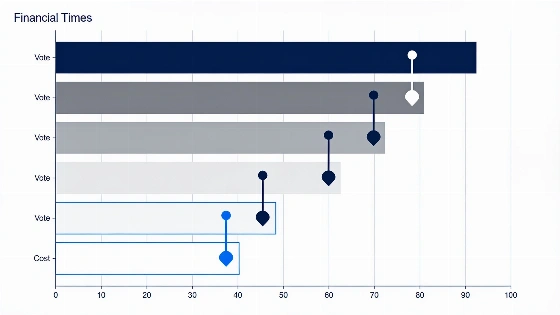
All three systems answered six SEO questions using the same hand-curated Open Knowledge Format (OKF) library. Gemini 4 Neon won five blind comparisons. Gemini 4 Hydrogen won one, while Gemini 3.8 Flash won none.
The result followed changes to Marie’s Brain, a private AI co-pilot built around the library. Its creator had switched the tool to Hydrogen, then questioned whether the newer model produced better answers. The test compared all three models with their names hidden and answer columns shuffled.
A prompt reset
Early Hydrogen runs exposed a problem with the setup. Marie’s Brain defaulted to Detailed mode without a word limit, and Hydrogen read an average of 21 OKF files per question. It took 68 seconds and produced essays averaging 1,600 words, at a reported cost of $0.44 per prompt, more than Neon’s cost in the later comparison. Some answers also included internal Google engineering terms such as MAGIT and FastSearch. The test’s creator considered them unnecessary for business owners looking into a traffic drop.
Before the blind vote, the default changed to Concise mode, targeting about 180–280 words, while Detailed mode remained available. Tool lookups were capped at one or two targeted OKF files per turn, and internal Google patent codenames were excluded unless requested. The revised test covered AI Overviews and traffic drops. It also asked about decisions to delete or rewrite informational posts, plus Main Content on commercial buyer’s guides. Other prompts covered thin location pages and agent readiness with /llms.txt. One asked for a five-hour-a-week plan that skips GEO distractions. Google describes Gemini 4 Neon as a general-purpose model for software engineering, knowledge work and science, with a 1-million-token context window. The test’s short-answer target and limited OKF retrieval defined a much narrower task. Google’s model announcement lists API rates of $3 per million input tokens, $0.15 per million cached input tokens and $15 per million output tokens.
That scope matters. The result reflects a preference among 18 answers to six prompts under the revised settings; it does not establish that Neon is generally the best model for SEO work. One prompt addressed AI Overviews and traffic losses, a topic distinct from how people choose between chatbots and conventional search, as discussed in this comparison of search trade-offs. Google Search Central says links shown in AI Overviews and AI Mode count toward a site’s overall Search Console traffic reporting, rather than appearing as a separate traffic channel. Google’s guidance on AI features describes the reporting treatment.
What the vote measured
After reading all 18 responses, the tester selected one winner for each question, then revealed the model identities. Voters favored Neon’s answers for how they explained their reasoning and communicated the point, not because they drew on more source material. All three models used the same OKF files.
The test interface lets readers try the same six questions. It shuffles columns A, B and C for each prompt, with a button to reveal the tester’s votes and reported token costs. The inputs were shared, but the answers and their costs varied.
The cost of the lead
In the revised Concise-mode runs, Gemini 3.8 Flash averaged 11.6 seconds and 292 words, with an estimated cost of $0.0455 per turn, or $45.46 per 1,000 turns. Alongside the 1,000-turn figure, the cost table estimates about $91 in Jan 2027. Gemini 4 Hydrogen averaged 12.8 seconds and 239 words at $0.0928 per turn, or $92.82 per 1,000. Google’s Gemini API pricing documentation gives input and output token rates separately. A prompt’s billed amount depends on tokens used, with applicable caching and pricing-tier terms. The Gemini API pricing page provides model-specific rates.
Neon averaged 70.8 seconds and 275 words. Its estimated cost was $0.1908 per turn, or $190.79 per 1,000, about 10 cents more per prompt than Hydrogen. One 3.5-minute API queue spike skewed the speed average. Typical Neon replies took 18 to 40 seconds, with text streaming as the model wrote.
Monthly estimates based on early active-user patterns put Neon’s added cost over Hydrogen at $4.90 for about 50 prompts and $12.25 for about 125 prompts. At about 300 prompts, the added cost came to $29.39. Those are conservative uncached estimates. Each turn references the same roughly 55,000-token OKF Master Index. Implicit context caching discounts repeated input tokens across multi-turn chats, lowering real-world bills, though the test supplied no specific savings figure.








