Voltaire's Daily SEO Guides Helped Drive a $41,000 Month
Voltaire has passed 60,000 downloads. Its AI-assisted search operation publishes about one guide a day, while buyers can take weeks to choose the $399.99 lifetime plan.


Google says AI Overviews cannot be switched off, but its Web view removes them from results. A test found that udm=14 works too, though Google does not document the parameter and could change it.
Google is making links in AI Mode and AI Overviews more prominent. Search Console still has no click figures, and Google has not set a date for adding them.
Third-party rank trackers face apparent fake data from Google, while paywalls make access harder. The weekly recap follows Gemini 4 Argon’s expansion into AI Mode and a new round of Google Ads changes.
Google says its News AI pilot now includes more than 400 publications worldwide. New U.S. local partners have joined, but Google has not disclosed what publishers are paid.
Reach says its logs recorded well over 100 million successful scrapes in six months. It has sent OpenAI a cease-and-desist letter while building a paid licensing deal with Google.
A California lawsuit challenges what Google says its tracking feature shares. Plaintiffs allege data also reaches outside companies, invoking state privacy laws against Google and UPS.
A selected Lookalike segment may soon stop acting as a hard boundary in Demand Gen. Advertisers can opt out if they want to keep the restriction.
Disconnected marketing data can stall AI programs before they deliver. Brandtech is bringing more than 500 specialists across 22 countries into one practice, citing an early client case with an 83% ecommerce revenue increase.
A field named siteAuthority appears in Google’s leaked search documentation. The record confirms an internal data field, but says nothing about how Google calculates it or how much it affects rankings.
A federal judge has tossed out Chegg and Penske Media’s lawsuits accusing Google of using AI search to divert web traffic. The decision marks a clear defeat for publishers trying to rein in Google’s use of their content in AI-generated answers.
Google’s pilot bills retailers only when shoppers redeem digital coupons at checkout. The model links ad spend to real sales and could upend how brands track return on investment.
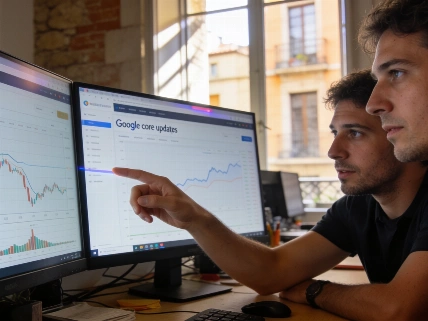
Months can pass before a site recovers from a Google core update-if it recovers at all. Internal quality signals now decide which publishers claw back traffic and which vanish. The four pillars of content quality are measurable, and the recovery clock is unforgiving.
Google’s new take on content effort throws out word count and time spent. Only what users see and gain on the page matters. Publishers must show real value or risk losing ground.
Google now lets advertisers preview up to 10 AI-generated headlines and descriptions in half a minute before Search ads go live. The tool promises tighter oversight and a shot at fewer brand slip-ups.
Google's new Playground platform lets users make and share games with just a prompt. The Unity partnership targets millions of new creators-no coding needed.
Digital publishers are under new pressure. As Google traffic drops and every click counts, those without a real edge are being left behind.
Kroger used predictive creative scoring to forecast ecommerce conversions with 81% accuracy. Ads that matched AI recommendations brought in four times more conversions.
AI-driven features and social platform tracking are transforming how publishers use Google Search Console. Discover the latest updates, new data limitations, and what these changes mean for content creators and newsroom leaders.
Google now penalizes sites for fake author profiles. The company has updated its guidance to target invented credentials and clarify what counts as basic content.
Marketers demanding AI-driven discounts are running into operational pitfalls. Agencies face fee cuts based on misunderstood productivity claims. A new approach is reshaping how marketing work is valued.
Google has suppressed nearly all Brown Brothers Media sites after revelations of mass AI-generated content, fake authors, and plagiarism. The company’s traffic once rivaled major news outlets. Now its empire faces a dramatic reckoning.
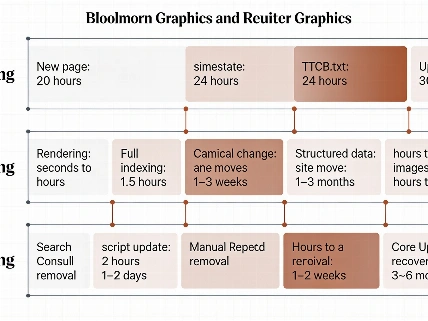
Google has published hard numbers on how long it takes for new and updated pages to get crawled, indexed, and shown in search. SEOs and publishers now see the real delays behind site discovery and ranking.
Manual review is now essential for any AI generated content. Google’s new Search guidelines require publishers to verify accuracy and label AI outputs before publishing.
AI-written articles can go wrong fast. Google now tells site owners to check every AI-generated piece before it goes live. Here’s what’s new and why it matters.
A federal judge has thrown out Penske Media’s lawsuit against Google’s AI Overviews. The court said scanning publisher sites and expecting traffic isn’t a contract. Here’s what this means for digital publishers.
AI search is draining publisher traffic. Media leaders are moving fast to build direct ties with readers, betting on creators and newsletters to keep revenue alive.
A handful of publishers are now getting paid based on how much their content fuels Google’s AI search and Gemini chatbot. The move lands as regulators and media companies press Google over AI-driven shifts in web traffic.
NetChoice, which represents tech giants, is urging the FTC to drop its plan for new personalized pricing disclosures. The group says the agency has no proof of harm and warns that the rule could confuse shoppers.
AI search now favors publishers who own their topics, not those chasing random keywords. Here’s why entity SEO is now essential for newsrooms and how it protects brands from algorithm hits.