
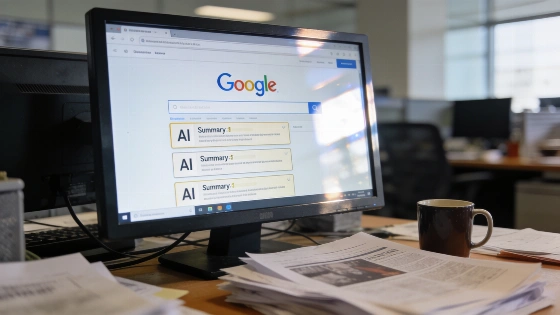
On October 15, 2026, Google said its News AI Pilot had grown to more than 400 publications worldwide. Launched in December 2025, the program pays publishers to supply specialized content for experimental Google News features, including AI-generated story previews and customizable audio briefings. Google calls it a licensing program: publishers are paid for delivering enhanced content and letting Google use it to develop new AI features, according to the program announcement.
The launch roster included The Guardian and El País. It also included The Times of India and The Washington Post, as well as The Washington Examiner.
CNN and The Financial Times have since joined. Google's announcement also names Axios and Forbes.
Among the local additions are The Post and Courier in Charleston, South Carolina, and Oil City News in Casper, Wyoming. Shaw Media, a newspaper chain based in Illinois and Iowa, has joined too, along with nonprofit newsroom The Texas Tribune. Shaw Media says Google pays it to provide specialized content for the features. Its reporting will be identified in the new formats, with links to original articles on Shaw Local, according to the publisher’s announcement.
Here’s the rub for publishers: Google has not disclosed individual deal terms or the total payments. It has also withheld any formula for calculating compensation per publisher. Brianna Puccini Duff, a Google spokesperson, said the pilot does not use a “pay-per-value” model, where a publisher’s compensation depends on how much its material contributes to an AI-generated output.
That separates the pilot from another Google licensing program. A Digiday report says the separate program pays publishers for content surfaced in AI Overviews and AI Mode. It also covers content surfaced in Gemini. The pilot instead pays publishers to supply material for experimental features, though Google has not disclosed the financial terms.
One test, called “story previews,” creates in-depth AI-generated summaries of recent articles. They may appear on a publisher’s Google News page, offering context before users visit the original article. A Washington Post example carries a disclaimer that the copy is AI-generated and “may include mistakes.”
Google’s “audio briefing” test builds customizable AI-generated podcasts in the Google News app by stitching together daily headlines. Users can choose topics such as “World” and “Gaming” news. “Sports” is another option. Google says each briefing includes publisher attribution and direct links to the articles it mentions.
Google says the pilot is meant to help publishers adapt as audience habits change. Duff told Nieman Lab: “People’s information consumption habits are changing, and we want to make sure publishers of all sizes, local newsrooms included, can navigate these shifts.” FAYFO has also covered Google’s separate Search guidance in its manual fact-checking report.








