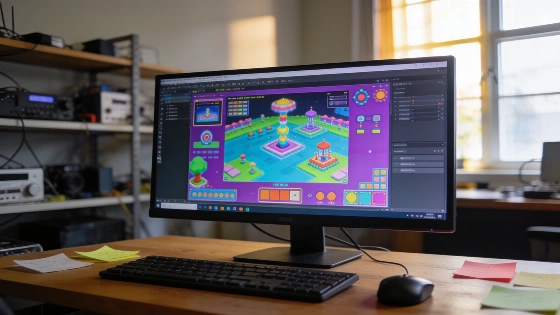
On October 7, 2026, Google dropped the barriers to game creation. Playground, its new platform, lets anyone over 18 in the United States build and customize playable games using plain language prompts. No coding, no technical hoops-just ideas and Google's AI. The company rolled out Playground alongside a partnership with Unity Software, taking direct aim at the old idea that only specialists can make interactive content. Access depends on Google One subscription tiers, according to an official Google announcement.
Playground allows users to keep their projects private, share them via link, or publish them in the public Explore gallery, all directly from a web browser on phones and laptops.
Unity CEO Mathew Bromberg told CNBC the goal is to "reduce the complexity of making games" with AI, opening the field to tens of millions of new creators. He called game development a mix of art and science, where level design, sound, and user interface all matter. The plan is to make the platform work everywhere: it starts on mobile, but will expand to web, PC, and consoles.
Google’s technical firepower and reach are at the heart of this push. Playground is aimed at consumers, but the Unity integration is meant to draw in both professionals and hobbyists. CNBC notes that about 70% of the world’s top 1,000 mobile games run on Unity, so this partnership lands right in the center of the interactive content business. Under the hood, Playground uses Google’s Gemini, Nano Banana, and Lyria models, all managed by a custom software harness from Google Labs to generate game content quickly and efficiently.
Unity Spark, currently in testing, is expected to introduce advanced game mechanics, high-fidelity 3D graphics, and direct access to Unity Runtime in the browser. Games created with Unity Spark will be published and distributed through Playground, with closed beta testing planned for later in 2026.
Google’s DeepMind division has used games as a testbed for AI breakthroughs for years. Demis Hassabis, DeepMind’s founder and now chairman, started out as a game developer and sees games as both a technical and creative challenge. Since 2010, DeepMind has used games to push AI forward-from beating Atari classics to cracking protein structures. AlphaGo, AlphaGo Zero, and MuZero all learned to master complex games from scratch, while AlphaStar reached Grandmaster status in StarCraft II by handling real-time strategy and incomplete information.
A recent research paper spells out Google’s aim: not to replace human creators, but to use AI as a spark for new ideas. The company wants to unlock new types of gameplay, make games more personal and accessible, and apply gaming breakthroughs to real-world science. The message is simple: AI isn’t just about automation. It’s a way to multiply creativity and open up new experiments.
For digital publishers and the creator economy, Playground’s launch could be a turning point. Making interactive games with almost no friction could change what it means to be a creator, blurring the line between player and developer. The next wave of audience engagement may come from AI-built experiences that anyone can make, remix, and share. Companies that move fast to adopt AI-driven workflows and try out new formats will set the pace. Those stuck in old production models could fall behind as the very idea of content shifts.
Unity Software, founded in 2004, has become a powerhouse in game development, powering a huge share of mobile and cross-platform games. Its tools are used by everyone from indie teams to major publishers, and its technology supports a vast world of interactive content. By teaming up with Google, Unity is looking to reach beyond traditional developers and tap into a new generation of creators who can build with AI at their side.