
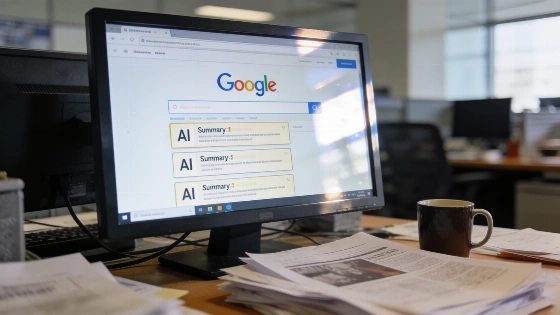
One publisher has already cleared more than $1 million in a year. Another, who joined just months ago, has pulled in $50,000 to $60,000. These are real payouts. They come from Google’s pilot program that pays publishers when their content powers AI search features and the Gemini chatbot.
Some smaller publishers in the pilot program have received less than $1,000 over several months, highlighting the wide disparity in payouts depending on content usage by Google's AI features.
The pilot pays out based on how often Google’s AI features surface and use a publisher’s content. This is a sharp break from old licensing or syndication deals, which usually pay flat fees. Google is testing a pay-for-impact model. The more a publisher’s work powers AI answers, the more money they get.
Google has confirmed that this is an early-stage pilot tied to experiments in monetizing AI features in search, but the company has not publicly disclosed the payment formula, selection criteria, or the full list of participating publishers.
The numbers are hard to ignore. The Information reports one early participant earned over $1 million in a year. A newer entrant has already made tens of thousands. These payouts are limited to a small group. Still, they show how AI-driven payments could change digital publishing if the program grows.
Industry watchers have tracked Google’s changing approach to AI licensing and publisher pay. As MediaPost reports, some small sites in the pilot have received less than $1,000 over several months. The program is selective and experimental. Google tracks exactly how much each publisher’s content contributes. This raises new questions about transparency, bargaining power, and whether these deals can last.
Paying publishers for AI feature usage won’t fix all of digital media’s problems. But it’s rare to see a tech giant put real money on the table after publisher demands. Regulators in the UK and EU are forcing Google to give publishers more control over their AI search participation. That adds pressure. For now, the pilot is small. But the early payouts show that AI-powered search is no longer just theory. Publishers who can prove their value in the AI supply chain may gain new leverage. They’ll need to watch the fine print.
Google, part of Alphabet Inc., is still the world’s top search engine. It handles billions of searches every day. Gemini and AI-powered search are now central to Google’s strategy. The company keeps investing in artificial intelligence. That shapes both user experience and publisher relationships. As scrutiny grows in Europe and beyond, Google’s payment model for content creators could set the standard for the whole industry.








