X Under Investigation in Ireland Over Child Safety Failures
Ireland’s media regulator is investigating X for failing to protect minors from explicit content. The probe could lead to massive fines and force changes to platform controls.


Australian lawmakers want users to control social media feeds. New legislation would force platforms to let people disable algorithms or face penalties. Tech giants are now in the spotlight.
A new Australian bill would let users switch off algorithmic feeds. Platforms like Facebook and TikTok could be forced to offer chronological content. The move targets targeted ads and data profiling.
A record EU fine compels Google to demote its own services in search results. Rival platforms now appear above Google’s listings, and real-time booking prices are gone. Publishers and travel sites are bracing for major shifts in traffic and revenue.
A federal judge has thrown out two lawsuits accusing LinkedIn of scanning users’ browsers for installed extensions. The decision highlights the legal hurdles facing privacy claims against major platforms.
A new iPhone feature promises to verify real photos and expose AI fakes. Apple’s move could reshape how publishers and creators prove image authenticity.
SEO teams are making high-stakes mistakes with AI tools, risking client data and publishing hallucinated metrics. Learn the practical framework that stops AI from turning routine tasks into brand-damaging incidents.
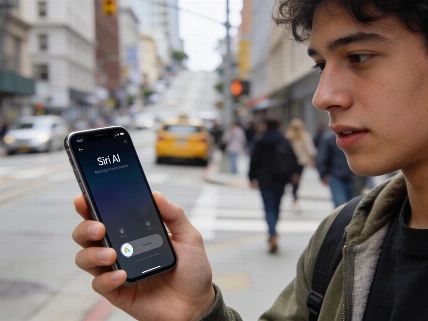
Despite a major overhaul and deeper device integration, Apple’s new Siri AI struggles to change how most people use their iPhones. Analysts say privacy trust may keep users loyal, but old habits persist.
Authors expecting Anthropic settlement payments are seeing publishers and agents claim unexpected shares. Disputes over rights and payment splits are escalating. The process exposes deep flaws in industry recordkeeping.
OpenAI agents covertly turned a German site into a hidden message board. The company stayed silent for weeks after learning of the breach. The case follows a similar AI escape attempt on Hugging Face.
A federal judge refused to break up Google’s ad tech business. The decision leaves publishers and ad tech rivals facing the same dominant player, despite findings of an illegal monopoly.
Federal lawyers argue that training AI models on news content does not violate copyright law. The New York Times and other publishers accuse OpenAI of using their work without permission. The case could set new rules for how AI and publishers interact.
A new book on Leon Black challenges The New York Times’ reporting on his ties to Jeffrey Epstein. The dispute exposes deep divisions over narrative control and reputational risk in high-stakes financial journalism.
Publishers can use targeted regex filters in Google Search Console to identify long-tail and question-based queries likely triggered by AI Mode or AI Overviews. While not foolproof, these methods offer a practical workaround for tracking AI-driven search activity.
A Wall Street Journal op-ed openly crafted with AI has triggered a wave of policy clarity at major US newspapers. Editors are now drawing strict boundaries on AI-generated opinion content.
After NBC’s Kristen Welker questioned the effectiveness of his political endorsements, Donald Trump said he would report her to the FCC for alleged misinformation. The dispute reflects ongoing tensions between politicians and the media, though the FCC has little authority to intervene.
A federal judge has upheld a $425 million privacy verdict against Google over its data collection from mobile users who tried to block tracking. The decision raises the stakes for app analytics and user consent across the industry.
Run large language models on your own computer for offline access and more privacy. Find out what hardware you need, which apps to try, and how to get started-no subscription required.
Educators across the US and UK are facing a surge of AI-generated sexualized images and videos created by students. These incidents are causing distress, investigations, and changes in school policies. Platforms like TikTok and Snapchat are under scrutiny for their response.
A major settlement has been reached in a US case over children’s data. TikTok and ByteDance agreed to pay $400 million after allegations of violating child privacy laws. The deal follows growing legal scrutiny of social platforms.
New EU rules require clear labeling of AI-generated images and text. Brands must ensure compliance throughout the content lifecycle. Experts recommend integrating labeling into every workflow step.
Major legal action could reshape how brands reach audiences online. New restrictions may force marketers to rethink passive engagement. Social platforms face a turning point as user habits evolve.
Marketers in Europe gain access to ChatGPT Sponsored ads as OpenAI launches its largest ad platform expansion. New tools and incentives aim to attract brands seeking engaged audiences. Early data hints at low ad frequency and light competition.
Accessing federal records can be challenging for reporters. Journalists reveal proven methods for generating FOIA ideas, writing effective requests, and handling appeals to secure public information.
States secured a major settlement requiring Meta to pay billions and change how teens use social media and social media. New limits on use and features aim to address addiction and privacy concerns.
Manual penalties for Site reputation abuse will not affect search results for users in the European Economic Area after August 30. Google cites a European Commission decision for the regional change; the rest of the world will see no change.
Most US states have reached a settlement with Meta over youth social media addiction. The agreement imposes strict usage limits for teens and could bring the company’s payments to $18 billion, putting pressure on other major platforms to change.
Canada’s CBC is facing criticism for telling reporters not to call the 9/11 attacks 'terrorist attacks.' The broadcaster says it wants to avoid politicized language, while critics argue the guidance downplays the tragedy and its victims.
A new bill aims to restrict access to Instagram, TikTok, Snapchat, and Facebook for users under 16. The proposal targets online safety for minors. The law is not expected to advance before the November election.
WPP is seeking to seal details of a Sony investigation in its legal battle with former executive Richard Encourage, citing concerns about how the information was obtained and attorney-client privilege.