
A new book on Leon Black challenges The New York Times’ reporting on his ties to Jeffrey Epstein. The dispute exposes deep divisions over narrative control and reputational risk in high-stakes financial journalism.
Bill Cohan’s new biography of Apollo founder Leon Black has set off a public dispute with The New York Times over how Black’s relationship with Jeffrey Epstein is portrayed. The book questions the Times’ reporting and highlights the ongoing struggle between authors and major newsrooms over who gets to shape the story-and how reputations are built or damaged in the process.
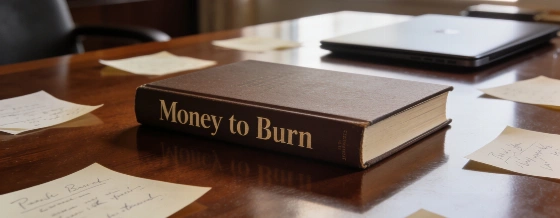
Cohan’s 673-page book, "Money to Burn: The Unvarnished Truth About Leon Black, Apollo, and the Rise of a New Wall Street," presents Black as a financial innovator whose downfall was driven by personal mistakes, not by deep involvement in Epstein’s crimes. This approach differs sharply from The New York Times’ 2020 investigation, which described Black as one of Epstein’s main financial backers, continuing to work with him after others had cut ties. Cohan has called his book a direct response to what he describes as a "Leon jihad" by the Times, arguing that Black has been unfairly singled out by several outlets, including the Financial Times and Airmail.
According to congressional files and investigator notes cited by The New York Times, Jeffrey Epstein assisted Leon Black in arranging approximately $20 million in payments to a dozen women, intensifying scrutiny of Black's financial dealings.
The conflict escalated when Times journalists David Enrich and Matt Goldstein-who have reported extensively on Epstein and Black and are working on their own book about Epstein’s Wall Street ties-challenged Black’s team and criticized Cohan’s depiction of their reporting. According to Cohan and others familiar with the exchange, the Times objected to not being given a chance to respond to their portrayal in the book, especially in a chapter that discusses Goldstein’s text messages with one of Black’s accusers. Cohan says he did speak with Goldstein during his research, but the disagreement points to the ongoing tension between long-form writers and daily newsrooms over access and narrative control.
The core of the dispute is how to interpret Black’s actions and Epstein’s role in his affairs. Cohan’s book relies on Black’s account and minimizes Epstein’s involvement in arranging payments. The New York Times, citing congressional files and investigator notes, has reported that Epstein helped Black arrange at least $20 million in payments to a dozen women, some of whom had sexual relationships with Black. These details, which emerged late in Cohan’s publishing process, have kept Black under scrutiny from lawmakers, including House Oversight Chairman James Comer and Senator Ron Wyden, who has raised questions about possible money laundering-allegations Black denies.
According to Semafor, Black’s representatives have repeatedly said he paid Epstein for legitimate tax, estate, and philanthropic planning services, and that he did not know about Epstein’s criminal conduct until Epstein’s 2019 arrest. However, as reported by The Wall Street Journal, Black’s payments to Epstein totaled more than $150 million, with some later estimates from congressional and media investigations putting the figure closer to $170 million.
Despite Black’s assertions of innocence, he remains under pressure from Congress to testify about his relationship with Epstein. Recent political statements have also linked him to alleged Epstein co-conspirators, keeping the controversy in the public eye.
The Guardian
The Times stands by its reporting. Spokesperson Charlie Stadtlander said their coverage has remained accurate as new details about Epstein have come to light. The debate is likely to continue, with Andrew Ross Sorkin of the Times set to interview Cohan at the 92nd Street Y on September 9, bringing the disagreement to a public stage.
This dispute between a bestselling author and a major newsroom highlights the competition over reputation and narrative in today’s publishing world. For publishers and writers, it’s a reminder that control over sources and story framing can shape public opinion, drive traffic, and influence legal risk. As investigative journalism and book publishing overlap more often, the ability to define and defend a story’s framing has become a key part of editorial strategy.