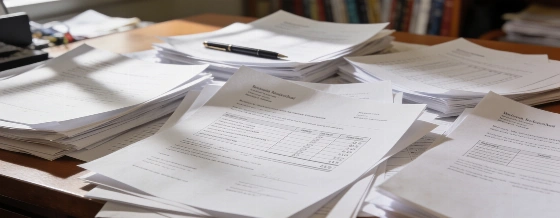
Authors expecting Anthropic settlement payments are seeing publishers and agents claim unexpected shares. Disputes over rights and payment splits are escalating. The process exposes deep flaws in industry recordkeeping.
Authors hoping for a straightforward payout from Anthropic’s $1.5 billion copyright settlement are running into a new problem: publishers and agents are making surprise claims on their compensation. For writers who thought their rights had reverted or who self-published, the sudden involvement of third parties has turned what should have been a simple process into a legal and financial mess.
In 2023, the U.S. Copyright Office received a record number of copyright-related complaints involving AI-generated content, highlighting the growing tension between technology companies and rights holders.
Writers have started sharing these disputes online. April Henry, who writes mysteries and thrillers, said HarperCollins claimed a book for which her rights reverted over 17 years ago. She even received a credit alert listing the publisher as her employer, which she says never happened. Victoria Strauss, writing for Writers Beware, has collected complaints in two main groups: publishers claiming payments for reverted works, and publishers demanding 100% of the settlement when they should only get half. Strauss blames much of this on poor recordkeeping, though the number and consistency of errors suggest a bigger, systemic problem.
Literary agencies are also getting involved, with some trying to claim a share of the settlement even when they don’t hold rights to the books. Courtney Milan, an author and former law professor, has publicly criticized agents for seeking a cut, arguing they have no legal basis for these claims. The Authors Guild is advising writers on how to dispute improper allocations, but the process is complicated by the need to prove when rights reverted-specifically, before the August 10, 2022 cutoff set by the settlement.
The Anthropic settlement is part of a broader trend, as major AI companies like OpenAI and Google have also faced lawsuits from authors and publishers over the use of copyrighted material in training datasets. These legal actions are prompting the tech industry to reconsider how they source and compensate for creative works.
The fallout is immediate. Authors now have to navigate a bureaucratic maze to secure payments they were promised, while publishers and agents risk reputational damage if they’re seen as overreaching. The situation is similar to other digital rights disputes, where old systems and unclear documentation create confusion and conflict. As reported earlier, the rise of AI and digital platforms has already shaken up traditional publishing, and the Anthropic settlement is exposing just how unprepared many in the industry are for these changes.
This isn’t just a paperwork issue-it’s a test of whether publishing can adapt to disruption from AI. The fact that so many authors have to fight for payments they’ve already won in court shows an industry still stuck with outdated practices and unclear relationships. Until publishers and agents fix their recordkeeping and clarify their claims, authors will keep facing bureaucratic hurdles and uncertainty. The Anthropic settlement was meant to compensate creators for unauthorized use of their work, but the current chaos shows that, in practice, the biggest threat to authors’ earnings may come from within the industry itself.
Anthropic, founded in 2021, has quickly become a major player in AI, raising over $1.5 billion and developing large language models. Its settlement with authors is one of the largest copyright payouts in the AI era, reflecting both the scale of its data use and the growing legal scrutiny facing AI firms that train on copyrighted material. As the industry deals with the fallout, Anthropic’s approach to rights management and compensation could set the tone for future disputes between AI companies and content creators.