Google’s search algorithms now analyze not just text, but also page layout, design, and interactive elements. New patents and research reveal how visual structure impacts rankings and topical authority. Learn what this means for SEO in 2026.
For years, SEO strategies focused on optimizing page text. But as Google’s algorithms evolve, the way information is visually structured on a webpage is becoming just as critical as the words themselves. Recent patents, research, and case studies show that Google now evaluates not only what a page says, but how it presents expertise, originality, and user engagement through its design and layout.
Visual semantics refers to the process of segmenting and interpreting documents by analyzing both their textual and visual components. Google’s systems have shifted from simply reading “web text” to understanding “web layout,” giving more weight to functional elements and design effort. The company’s Quality Rater Guidelines highlight “human effort and involvement,” with design quality now a key part of that assessment.
Historically, Google’s Page Layout algorithms targeted ad-heavy sites, but today’s systems are far more sophisticated. Modern webpages are dense with interactive cards, comparison modules, and dynamic components. Google’s engineers, including those behind Gemini and AI Mode, have developed inventions like Structured Information Cards and layout-aware multimodal document understanding to better interpret these complex layouts.
According to Google’s patents, important information is often embedded in interactive card structures-such as product, hotel, or trip cards-rather than in plain paragraphs. To rank these pages accurately, search engines must grasp not just the text, but also the hierarchy, visual relationships, and functional meaning of each structured block.
Understanding these layouts requires advanced neural networks and large language models that can annotate and “verbalize” web documents. Without this, Google can’t reliably rank sites like flight aggregators or credit card comparison platforms, where key data is presented in cards, tables, and interactive elements.
Microsoft’s early ViPS algorithm, later cited by Google, pioneered vision-based segmentation. Google then patented its own HTML-heavy segmentation approach, both relying on HTML to map text to visual blocks. As embedding-based algorithms gained traction, the concept of “chunking” content became popular. But chunking is not just linguistic-it’s also about visual and structural segmentation. If a document isn’t visually clear, even the best entity relationships or factual accuracy may not help it rank.
Google’s “centerpiece annotation” concept further illustrates this. The centerpiece annotation identifies the primary content of a page, helping Google understand its main purpose. Internal documents revealed that centerpiece annotations, often limited to about 400 characters, are used to classify and rank news and other documents. Proper HTML structure is crucial-if share buttons or boilerplate interrupt the main content, Google may misinterpret the page’s focus.
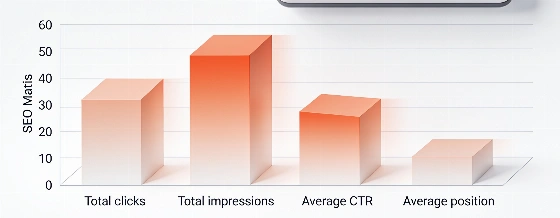
Case studies show the impact of visual semantics in practice. In one example, moving a calculator component from the bottom to the top of a page-making it the centerpiece annotation-led to a 30.5% increase in clicks and a 98.6% jump in impressions, even as average CTR dropped. This change, applied across 100,000+ programmatic SEO pages, prompted Google to re-crawl and rerank the entire site. In highly competitive niches where answers are identical, the way information is structured and visually prioritized can be the deciding factor in rankings.
Retrieval cost is another key concept. Google weighs the computational cost of processing a page against its quality. After the December 2025 core update, Google reduced its HTML file size limit to 2 MB and began large-scale deindexing, especially targeting sites with AI-generated content lacking human effort. If a page’s layout makes it hard to interpret or fails to demonstrate relevance quickly-especially in the centerpiece annotation-Google may skip deeper evaluation.
During the antitrust trial, Google’s Pandu Nayak explained that expensive algorithms like RankBrain are reserved for pages with strong topicality and click data. Initial evaluations focus on layout, components, and structured cards to reduce retrieval costs and improve quality. High-quality sources invest in systems, layouts, and user interactions, while low-quality sources simply scale text.
Google now uses visual and layout-related embeddings to classify websites as expert, apprentice, or amateur sources. For example, it distinguishes between sites authored by doctors, medical students, or laypersons based on their design and structure.
The helpful content system, introduced to identify genuinely useful sites, also relies on visual semantics. Google first classifies websites by type-affiliate, aggregator, ecommerce, SaaS-based on layout and components, not just text. A page’s ability to support user actions like comparing, filtering, or purchasing is as important as its relevance. After the Helpful Content updates, Google added “misleading functionality” to its spam policies, penalizing pages that imitate functions without delivering them.
Google also applies diversity constraints in the SERP, limiting how many pages of each type-listicles, ecommerce, videos-appear together. Internal modules like “max_total” and “BlogCategorizer” help cluster and constrain results, while the Content Warehouse API’s “WebrefFatcatCategory” assigns categorical weights. This means a relevant page may still be limited by the overall SERP composition.
Click data is aggregated by source type, and Google’s research shows that shorter dwell times can sometimes indicate a better user experience, depending on the category. The company’s reranking models and patents like “Merging Search Engine Results” use click, attention, and satisfaction data to refine rankings, with visual structure playing a key role in classification.
Topical authority now depends not just on covering the right topics, but on matching each topic and query with the optimal page layout, components, and functional design. For example, AudioToText.com, a single-topic site with just 13 pages in 12 languages, continues to grow in visibility because its exact-match domain, visual semantics, and fast click satisfaction allow Google to classify it as a “no-signup transcription tool” and rank it in AI Overviews. The site’s primary conversion element is placed above the fold, reinforcing its function.
Other examples, like attorneys.lexinter.net and Pricelisto.com, show that moving content to subdomains with added functional elements-such as filtering or comparison tools-can help sites avoid filters and improve rankings. These changes prompt Google to reprocess layouts and run more advanced evaluation systems.
Looking ahead, Google is experimenting with new search interfaces, including AI-generated landing pages that use visual segmentation and annotations. The January 2026 patent “AI-generated content page tailored to a specific user” describes generating landing pages based on layout and user feedback. Research like “Neural Design Network: Graphic Layout Generation with Constraints” explores how systems can classify and generate webpage layouts for better search performance.
Google’s multimodal document understanding, now powered by Embedding 2, uses neural networks to vectorize text, images, videos, and layouts. This allows Google to compare different versions of a page and evaluate how layout changes affect classification and retrieval. The centerpiece annotation, derived from these systems, helps Google label pages as ecommerce, product, or SaaS, and could eventually enable Google to construct its own landing pages from multiple sources.
Patents like “Search result ranking and presentation” show how Google can adjust SERP features based on an entity’s attributes, reorganizing and redesigning results dynamically. Query augmentation, as described in patents by Krishna Bharat and Anand Shukla, aligns user intent with the right page type, layout, and function. For example, “air conditioner” queries may require forum, directory, hybrid, or instructional layouts depending on the search intent.
Effective topical maps now define not just topics, but also the ideal layout and components for each query type. This reduces retrieval costs, increases PageRank concentration, and boosts relevance. Early results from projects using this approach show measurable improvements in search performance.
Visual semantics also influence how content is distributed above and below the fold, with main content prioritized for relevance and supplementary content supporting context and internal linking. Google evaluates factual, opinionated, structured, and unstructured content based on query augmentation, using different visualization and verbalization techniques to maximize relevance.
Algorithmic authorship, supported by research like “Are LLMs Reliable Rankers?” and frameworks such as “Rank anything first,” uses predefined sentence structures and entity-attribute-value triples to improve rankings. Depending on the query, Google may prefer different combinations of factual, opinionated, structured, or unstructured content, each supported by the right visual and functional components.
Case studies from industries like online dating show how Q&A components, forum-style discussions, and interactive elements can enhance both relevance and responsiveness. Visualizing content through tabs, voting, and contextual components helps distribute authority and improve user engagement.
Much of Google’s progress in visual semantics is driven by engineers like Dr. Marc Najork, Michael Bendersky, and Alexander Grushetsky, who have contributed to foundational patents and research on layout-aware document understanding and structured information cards. Google’s WebRef and Web Page Transformer projects now vectorize webpages using both text and visual layout, making visual context a ranking factor alongside textual relevance.
For more on how short user-generated content can influence AI-powered search results, see this analysis of how Reddit posts can manipulate AI search rankings.