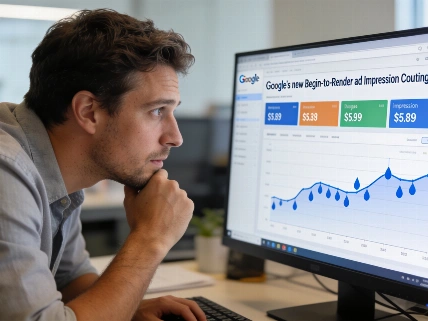
Google Tests AI Overview Source Links at Bottom
The test puts a source-count control below Google's AI Overview; hovering reveals its citations. The placement may make sources less visible, but no click impact is reported.
A Daily Mail test reported visibility rising from about 50% to nearly 75% across selected prompts. OpenAI’s dashboard gives verified businesses a separate platform view of appearances and website clicks.
One French site’s daily Google clicks fell nearly 69% after the July 22 rollout, while two of five sites in Glenn Gabe’s sample stayed relatively stable. The timing alone does not prove AI Overviews caused the declines.
A GEO guide draws on 247 source records and 1,329 pieces of evidence to challenge routine advice on content refreshes and crawler access while assessing AI visibility. It also sets clear denominators for measuring citations and recommendations.
Ahrefs says DR4 correlates more strongly with Google rankings across hosts and subdomains than its current model. Users can preview scores through the free API or a demo page before the planned December 1 rollout.
Google’s search queries grew at their fastest pace in five years, yet search revenue growth slowed to 12% in Q3. An executive pointed to lower monetization in AI Mode as one factor.
Search volume can miss breaking demand and the follow-up questions readers ask. SEO experts explain how publishers are adjusting their research and which tools still help.
A Daily Mail test lifted one brand’s visibility in selected AI answers from about 50% to nearly 75%. Publishers are selling that kind of exposure even as its impact on sales remains hard to measure.
A study of 75,000 brands found that web mentions tracked AI Overview visibility more closely than raw backlink totals. Strong authority still helps, but useful facts on a site give answer engines material to cite.
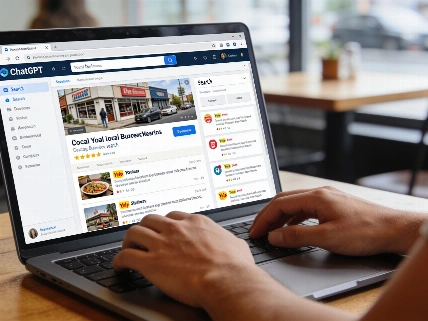
The planned dashboard would count business appearances in ChatGPT answers and clicks to company websites. Access appears tied to verified ownership and the feature is still in development.
Google AI Overviews retrievals rose 293% for the selected videos versus 27% across YouTube overall. The 60-video study revised 15 descriptions and added manual timestamps on Oct. 19.
The 3.7x average return is based on Outpace SEO’s internal client data. Two case studies report organic traffic gains above 350%, but the release does not disclose the sample size or calculation method.
Startup Fortune says queries already sending searchers to its site revealed a gap: it had no useful email-verification guide. The team published one and recorded more than 1.2K views in its first two days.
A review of 10,000 Google keywords found unrelated one-word results in most flagged rank-tracking cases. Separate updates to Lighthouse and AI search measurements add more reasons to check how each number was produced.
Since founding SEO en un Click in 2019, Marta Ciruelos has focused on helping businesses reach people searching for their services. The Madrid-based company pairs SEO with website development and local visibility strategies.
The Bridgewater agency is aimed at small and midsize service-area businesses, especially home-service firms. Its approach combines town-specific webpages with SEO and advertising services.
A Google AI Mode example showed how an ad can miss a shopper’s immediate need: a financing query returned used-car listings. Adthena’s data tracks the growing paid-search footprint across AI platforms.
Its examples cover guest contributions and digital PR. Tlinks says it avoids private blog networks and makes no guarantees about domain ratings or specific placements.
A search marketer's screenshot is the only reported evidence of sponsored results inside Bing's AI answers. Microsoft has not confirmed a wider rollout or explained how the placement works.
A new filter control lets users combine device categories in one view. Google Search Console added multi-select for countries about a month earlier, and the report’s author says the device option is visible in their accounts.
A 2026 analysis estimated that 68.01% of U.S. Google searches ended without a click to the open web. ResultFirst says businesses need to measure how search visibility translates into engagement and revenue.
A 2026 analysis estimated that 68.01% of U.S. Google searches ended without a click to the open web. ResultFirst says companies need measures that show whether search visibility leads to meaningful business results.
Clients are asking DS Network LLC to keep search strategy and website work under one roof. The Chattanooga firm says its expanded offering will remain focused on a defined set of digital services.
The Islamabad agency is adding AEO and GEO alongside existing SEO and paid advertising. It says the services are intended to help businesses appear in AI-powered discovery as well as traditional search.
News Box-only SERPs fell from 75% to 34% in the study period while AI Overview-only results climbed from 5% to 33%. The figures describe U.S. search results and do not establish why publisher traffic changed.
The MCP server connects Keytomic’s SEO toolkit to tools including Claude and ChatGPT. Its tracker measures brand mentions across AI search while the Reddit agent leaves replies for human approval.
A competitor’s visibility gains coincided with use of an SEO automation platform, though the investigation did not establish causation. Faster workflows still need human approval and judgment.
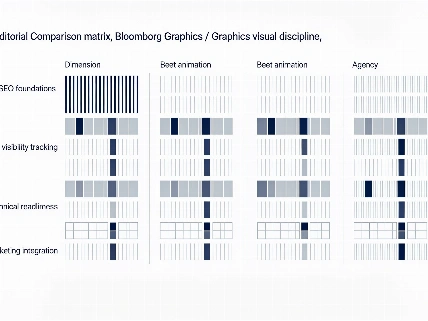
Ten Malaysia agencies sell AI-search optimization, yet their public offers point to different jobs, from visibility tracking to technical site work. The useful comparison is the operating model each business actually needs.
A Massachusetts agency is combining conventional SEO work with AI-answer tracking for established U.S. B2B companies. Its measurement separates citations from recommendations and ties results to revenue only when client data allows.
News Box-only results fell from 75% to 34% between October 2025 and August 2026. Over the same period, AI-only results climbed from 5% to 33%.