Press Groups Demand Probe After Attack on Rolando Rodríguez
Rodríguez was out of the city when the blast set fire to his garage. His wife escaped unharmed; police later arrested a first suspect.
Security alerts prompted evacuations at four Bogotá news outlets. WAN-IFRA and AMI are urging Colombian authorities to strengthen protections and reconsider rhetoric directed at journalists.
A leading Amazonian news outlet has suspended all election coverage after repeated threats. The move exposes the rising dangers for regional journalists in Brazil.
Meta is testing Community Notes in 16 Latin American countries, raising concerns from fact-checking leaders who fear the move could weaken professional verification and increase misinformation.
A proposed media law in Mexico could let officials judge news coverage for truth and balance. Critics warn it may chill press freedom. The plan includes steep financial penalties for violations.
A new study in Chile finds that readers care more about transparency and human oversight than about whether AI is used in journalism. BioBioChile’s approach offers a model for ethical AI disclosure.
Uber has renewed and expanded its media agency partnership with Omnicom Media. The agency will oversee media duties in North America, EMEA, LATAM, and Brazil, while WPP Media retains APAC responsibilities.
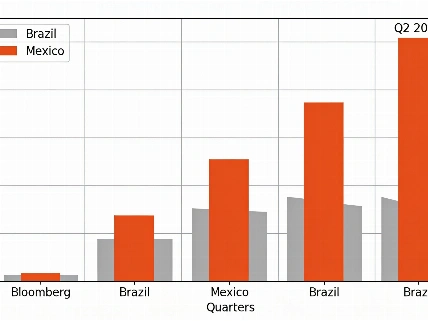
Venture capital investment in Mexican startups soared to $944 million in Q2 2026, outpacing Brazil and drawing major U.S. investors. The region saw a 47% year-over-year funding increase, with late-stage deals dominating.
A journalist was shot dead in Puebla, marking the sixth such case in 2026. Press freedom groups are demanding action. The attack happened near the victim’s home. No arrests have been reported.
Startup investment in Argentina and Spain is climbing in 2026, with both countries producing impressive fintech and space tech deals. While still trailing regional leaders, their latest funding rounds signal growing momentum.
Newsrooms in Latin America are formalizing AI policies, setting clear rules and training staff while building oversight to manage AI’s role in reporting. Recent incidents highlight the risks of unclear guidelines.
Social media accounts tied to independent journalism in Brazil are being removed ahead of elections. FENAJ says these actions threaten press freedom and public debate. The removals are especially severe in regions with few news outlets.
Top data reporters shared how they cover climate impacts in Latin America. They discussed the struggle to access reliable data. New tools and platforms are shaping environmental journalism. The roundtable offered practical insights for newsrooms.