
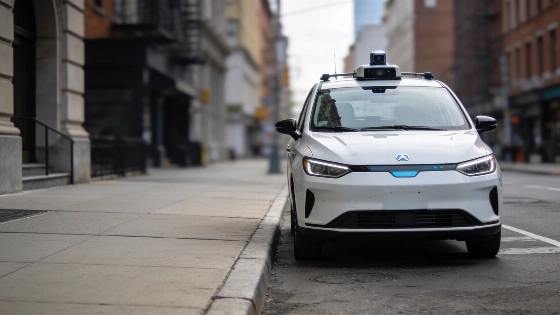
Two Dallas Morning News opinion pieces by lawyer Amy Witherite received Pangram scores of 95% and 71% likely AI-written, according to Semafor. Neither piece carried an AI-use label. The scores add to a wider set of local op-eds criticizing Waymo’s autonomous taxis.
The pieces questioned the risks and costs of driverless service. Pangram also rated a San Francisco Chronicle article about vehicles going dormant during power outages as 88% AI-generated, and a New York Daily News op-ed at 68%. A San Diego Union-Tribune piece on possible job displacement scored 95%; a Times of San Diego article about tracking Waymo’s rollout scored 87%. Pangram’s text detector also featured in a 2025 University of Chicago study of samples roughly 500 words or longer. The study compared it with services including Originality.ai and GPTZero, as the Indian Express reported. The detector’s percentage scores assess text; they do not identify who drafted or approved it. Pangram’s published evaluations are described as model-based assessments.
Who drafted the pieces
The detection figures do not by themselves establish who wrote or approved each passage. Responses reported by Semafor describe a mix of human review and AI use. The outlets’ disclosure policies differ.
David Margulies, a spokesperson for Witherite, said her firm’s communications operation helps prepare and place the op-eds, handling drafts and edits. He said staff sometimes use AI to prepare initial drafts, which are reviewed and fact-checked before Witherite or other attorneys review them; Witherite gives final approval. Margulies said every piece under her name reflects her views.
Dallas Morning News commentary editor Ryan Sanders said the paper accepts limited AI use for research or polishing but rejects pieces generated entirely by AI. He said the newspaper’s policies asked opinion writers to disclose AI use. That distinction leaves room for AI-assisted work, while making disclosure dependent on the writer’s account.
Another example of that newsroom problem appeared in FAYFO’s report on NYT Cooking’s AI recipe tool, where reader responses to recipe modifications were largely negative. In the Waymo pieces, Pangram’s scores quantify its assessment of text. The source reporting does not establish how much AI contributed to each final submission.
Different disclosure lines
Michael Redmond, whose article appeared in the San Francisco Chronicle, said he uses AI to research and organize his thinking, including testing arguments. Chronicle editor Matt Fleischer told Semafor the publication asks opinion contributors to disclose whether they used AI.
Ira Goldstein, former head of New York’s Black Car Fund and author of a New York Daily News op-ed, said a public relations firm prepared its first draft and he edited it. In a statement to Semafor, Goldstein said he stood by the piece and argued that undisclosed AI assistance was less consequential than the economic and public-safety damage he believes robotaxis could cause. He also said the firm later dropped the campaign to work for Waymo.
At the Daily News, executive editor Andrew Julien said the paper wants stricter AI guardrails, citing its litigation against Microsoft and OpenAI. He said the publication believes readers deserve original opinions rather than machine-generated material from companies it is suing over alleged content theft.
A larger campaign
The op-eds sit within a monthslong fight over Waymo’s commercial operations in major cities. The company operates in 15 U.S. cities and faces opposition from labor unions and ride-hailing companies including Uber and Lyft. Pedestrian-safety advocates also oppose it.
The Washington Post reported that the Coalition for Accountability and Road Safety, a Waymo-opponent group, spent more than $2.6 million on ads in the Washington, D.C., area in 2026. The Post said that exceeded the spending of the winning mayoral candidate in the same year. The campaign’s opinion pieces are one strand of that broader opposition.
Media outlets are drawing different lines around AI-assisted opinion writing. The Wall Street Journal’s opinion editor has said AI-generated submissions from notable figures can be accepted without disclosure if they are newsworthy and relevant, with a strong argument.








