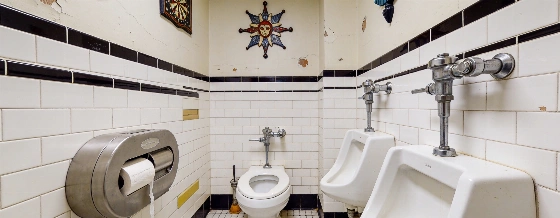
A freelance designer has spent three years 3D scanning public restrooms across the US. His digital archive now invites public submissions and reveals the overlooked quirks of American bathroom culture.
The Restroom Archive doesn’t greet visitors with a dry list or a search bar. Instead, you land on a random 3D scan of a public bathroom-maybe a Utah antique mall with squirt gun murals, maybe a gutted airport restroom stripped to dirt and pipes. It’s not a joke. This is a digital museum, and for the past three years, Jake Welch has been quietly turning some of America’s most ignored spaces into a living, collaborative archive.
The Restroom Archive describes itself as an ongoing repository of publicly accessible restrooms, with each visit serving a random 3D scan, location, and a short description.
As his collection grew, Welch started noticing the small details that make each restroom distinct. Some are dingy truck stop stalls with graffiti-scratched mirrors. Others are unexpectedly well-designed or decorated. Welch points out that Utah’s bathrooms tend to be big and commercial, while New York’s are cramped, improvised, and sometimes double as storage. These differences, he says, reflect the culture and constraints of each place, turning every scan into a snapshot of the people who pass through.
The project has moved beyond Welch’s own camera. The Restroom Archive now accepts public submissions, with a few ground rules: no trespassing, no private homes, and nothing too disgusting. Welch reviews every scan himself to keep the archive accessible and, in its own way, dignified. Submissions have already come in from as far as Dublin, where a pub bathroom is covered in soccer and political graffiti, and from Tennessee, where someone uploaded a scan of a gutted airport restroom-just a dirt floor and the outline of a urinal left behind.
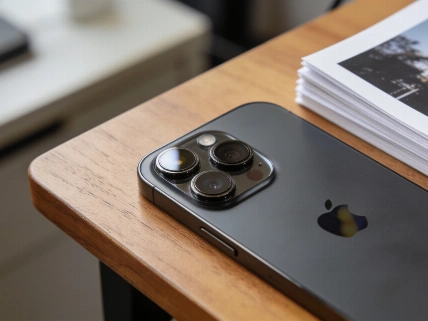
Welch’s scanning workflow relies on smartphone photogrammetry, especially Polycam, which stitches hundreds of photos into immersive 3D environments. The project began in 2023 as a joke before evolving into a formal site.
Welch could use more advanced 3D modeling, but he prefers the lumpy, stitched-together look of photogrammetry. The flaws fit the subject. Mirrors and trash cans turn surreal, and the photographer’s absence leaves strange gaps. Welch sees these quirks as part of the point-they capture the in-between, often forgotten feel of public bathrooms.
For digital publishers and creators, The Restroom Archive is a lesson in how niche, participatory projects can catch on. The site’s redesign borrows from museum and library archives, treating its subject with unexpected seriousness. A viral Instagram reel brought a wave of visitors and new contributors, showing how humor, honesty, and community can break through online noise. Welch’s mix of technical curiosity, careful curation, and willingness to take the absurd seriously offers a model for building memorable, shareable archives around unlikely topics.
By documenting what most people ignore-and inviting others to join-Welch is rethinking what digital archives can be. Treating public restrooms as worth preserving challenges the idea of what deserves a place online. The Restroom Archive’s mix of humor, care, and open participation shows that even the most ordinary spaces can tell stories. For anyone looking to build distinctive, high-engagement projects, Welch’s archive is proof that curiosity and authenticity still stand out.