NFL ads now deliver the punch of dozens of primetime spots. But as streaming fragments the audience, marketers must question which numbers actually prove value.
One Super Bowl ad now delivers the same impact as 1,455 standard primetime commercials. That figure comes from EDO, which tracked every national NFL spot last season and found that postseason placements drove record engagement. But as brands spend millions for a piece of football’s biggest stage, the real challenge isn’t just buying reach-it’s figuring out what that reach means in a fragmented media world.
EDO's 2026 report found that halftime studio-show integrations were nearly three times more effective than average sponsorship slots, delivering a 198% uplift over standard placements.
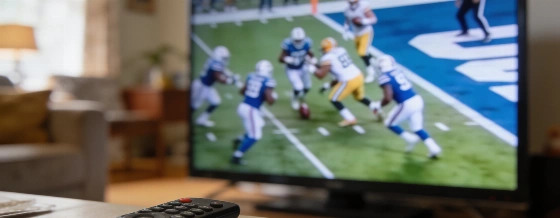
For brands, these numbers have real consequences. EDO’s analysis shows that the average regular-season NFL ad now matches the impact of 73 primetime spots, up 15% from last year. In the playoffs, that multiplier jumps to 172. Not every category sees the same lift: pharma ads outperformed their own primetime benchmarks by 95%, while QSR and internet/telecom saw 54% and 24% increases. Placement and format matter, too-halftime studio-show integrations outperformed standard sponsorships by 198%, and the first ad in a Super Bowl commercial break generated 1.7 times the engagement of those that followed.
These details matter because NFL games now air across both broadcast and streaming, each with its own quirks. On Amazon’s Thursday Night Football, for example, a “viewer” might be someone who never actually watched the game, since it can auto-play in a shopping window. That leaves marketers with audience numbers that are both a selling point and a moving target, forcing them to look beyond the headline figures and question how those numbers are calculated.
EDO emphasized that measuring NFL sponsorships has historically been a largely manual process. In the 2025-26 season, the company claims to have measured the impact of every on-screen sponsorship aired during nationally televised NFL games, highlighting the growing importance of precise sponsorship value assessment for brands.
But audience measurement and outcomes data aren’t the same thing. One tells you how many people saw your ad; the other tells you what they did next. As NFL rights spread across platforms with different standards, marketers have to examine both before committing to expensive inventory. A big audience number or league-wide benchmark can’t answer whether a specific buy delivered real value.
Publishers and agencies have run into similar problems in other premium ad categories, as shown in a recent investigation into sponsored content pricing. The lesson is the same: headline numbers rarely tell the whole story, and operational details can make or break ROI.
As the 2026 NFL season begins, there’s no question about the league’s advertising power. EDO’s research shows that NFL inventory outperforms primetime across every measured category. But for brands paying top dollar, the real work starts after the buy: figuring out which placements, formats, and measurement methods actually drive consumer action. Marketers who rely on surface-level audience claims risk overpaying for flash without substance. The smart approach is to demand transparency, test every variable, and never accept a single number as proof of value in a market where definitions keep shifting.
According to a Reuters report published on September 2, 2026, the NFL is working to grow its international fan base but admits there’s a lack of high-quality, measurable data to track progress outside the U.S. This data gap makes it harder to judge the real impact of global marketing efforts.