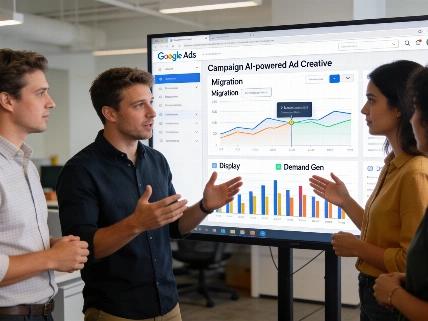

Performance marketers now face new demands as Google’s Demand Gen campaigns shift PPC from intent-based targeting to full-funnel creative strategy. Learn how audience insights, creative assets, and attention metrics are reshaping paid search success.
Google’s Demand Gen campaigns are pushing pay-per-click (PPC) advertising far beyond its roots in capturing existing search intent. Marketers can no longer rely solely on keywords to reach ready-to-buy customers. Instead, they must understand how to spark interest before a search even happens, blending creative strategy, audience psychology, and multi-stage measurement into their daily work.
Demand Gen is designed to drive engagement and action across YouTube, Gmail, Maps, Discover, and the Google Display Network. Unlike traditional paid search, which responds to explicit queries like “buy king size ottoman bed,” Demand Gen requires marketers to earn attention from users who haven’t yet expressed intent. This means crafting images, videos, and messages that resonate with people as they scroll, watch, or browse-often before they realize they have a need.
The End of Intent-Only PPC
Historically, paid search thrived because users told Google exactly what they wanted. Marketers could infer product preferences, intent, and even price sensitivity from search queries, then optimize campaigns around those signals. But with Demand Gen, the dynamic shifts: the ad must create the question, not just answer it. Someone watching YouTube Shorts or browsing Discover hasn’t asked for a new sofa or software-they need a reason to care.
This evolution exposes a creative skills gap in many PPC teams. Creative assets can no longer be an afterthought or outsourced task. Google’s own guidance recommends mixing images and videos in multiple formats, and its data shows that advertisers using both see 6% more conversions for the same spend compared to images alone. The right creative determines whether campaigns reach users across placements and devices, and whether they stop scrolling long enough to engage.
Creative Strategy Meets Campaign Strategy
For example, an online furniture retailer launching a modular sofa can’t just target “modular corner sofa” searches. Demand Gen requires creative concepts that show a small living room transformed, a family adapting their space, or a customer explaining their need for flexibility. The brief must define the audience, the problem, the emotional response, and the next action-blurring the line between media and creative planning.
Audience understanding becomes even more critical when there’s no keyword to reveal motivation. Demand Gen offers targeting options like first-party data, lookalikes, and behavioral signals, but selecting an audience isn’t the same as understanding it. Marketers must dig deeper: Why would someone care? What objections do they have? What evidence do they need? Ocado’s Demand Gen case study, for instance, found unexpected audience segments by continually testing creative and messaging, not just relying on demographics.
Measuring Attention and Impact
As visual advertising grows, attention itself is becoming a performance metric. Traditional PPC reporting focused on clicks and conversions, but now marketers must ask: Did anyone actually notice the ad? The IAB and Media Rating Council introduced standardized attention measurement guidelines in November 2025, reflecting the need to track signals like time in view, scroll behavior, and video completion rates. Google already reports engaged-view conversions for video campaigns, acknowledging that exposure can drive later actions even without a click.
Last-click attribution often credits paid search for conversions that were actually sparked by upper-funnel campaigns. For example, a user might see a compelling YouTube ad, then search for the brand days later and convert via paid search. Google has cited Fospha research showing that last-click models can significantly undervalue YouTube and Demand Gen’s contribution. Better measurement may require combining attribution reports, GA4 journey analysis, CRM data, and brand search trends.
Demand Creation in Practice
Effective demand creation means showing outcomes, not just products. A cookware retailer might highlight the frustration of food sticking before demonstrating a pan’s solution. Professional services can spotlight ignored problems, like poor financial visibility, to create urgency. B2B software marketers can lead with inefficient processes, using video to show the pain points their tools solve. High-consideration purchases, such as real estate, benefit from early intent campaigns-Zoopla’s Demand Gen effort, for example, used emotional creative and life-event audiences to drive a 14% increase in valuation searches and a 28% rise in leads.
For a deeper look at how AI-driven search is changing brand visibility and why repeat mentions matter, see this analysis of how AI search engines recommend brands with deep topical focus.
What PPC Specialists Need Now
The modern PPC specialist still needs technical skills-conversion tracking, bidding, account structure-but must also master creative diagnosis, customer research, better creative briefing, structured experiment design, and full-journey measurement. It’s no longer enough to optimize for clicks and conversions; marketers must track search lift, new customer acquisition, and incremental impact across the funnel.
Demand Gen isn’t just another campaign type. It removes PPC’s traditional safety net: there’s no keyword confirming intent, no guarantee the audience is interested, and no search query to guide messaging. Marketers must now understand their audience, earn attention, and create demand-skills once reserved for brand or creative teams, but now essential for performance marketing.