
A 26-week experiment at an education SaaS company reveals how aligning SEO and PPC can boost search visibility, address buyer doubts, and cut cost per acquisition. See the data behind their coordinated strategy and what changed.
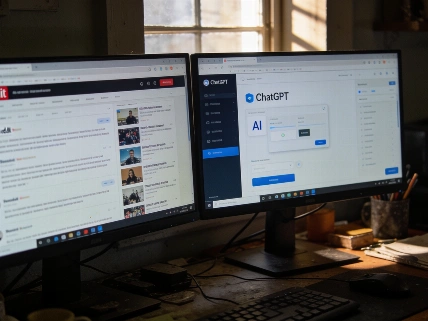
When potential buyers look for software, their journey rarely starts-or ends-on your website. Instead, they scan AI Overviews, browse Reddit threads about your pricing, ask ChatGPT for recommendations, watch YouTube and TikTok reviews, compare competitors, check Google Business Profile ratings, and only then might click your paid search ad. Every one of these touchpoints shapes trust, making it critical for brands to be visible across the entire search landscape.
Optimizing SEO and PPC in isolation can improve individual metrics, but often misses how these channels influence each other throughout the buyer’s decision process. The real challenge is measuring the added value when both work together.
The 26-Week Co-Optimization Test
An education SaaS company specializing in online course platforms launched a 26-week initiative to coordinate its SEO and PPC strategies. The company faced multiple friction points: core commercial keywords ranked at an average organic position of 15.2, paid search campaigns saw an 11.4% CTR, a negative Reddit thread ranked No. 4 for branded searches, Google Business Profile reviews averaged 3.6 stars from 37 reviews, and the site had 212 referring domains.
Instead of tackling each issue separately, the company tested how resolving specific friction points would impact performance across all search channels. This approach recognized that buyers form opinions long before they reach the company’s site, encountering AI answers, forums, videos, reviews, ads, and third-party content along the way.
Building Reputation and Authority
During the first eight weeks, the focus was on strengthening trust signals outside the company’s own website. A structured review campaign increased Google Business Profile reviews from 37 (3.6 stars) to 164 (4.3 stars). Simultaneously, a digital PR push secured 23 new editorial placements, raising referring domains from 212 to 235. These efforts provided credible proof points for buyers at early stages of their search journey.
Aligning Content With Search Demand
With trust signals improving, weeks 9-13 shifted to closing content gaps. Paid search term reports revealed high-intent queries-like competitor comparisons and pricing questions-not fully addressed on the site. By mapping paid demand to organic content, the team identified 11 high-value opportunities. Expanded and new commercial pages targeting these queries generated 8,742 organic sessions over the next 13 weeks. Meanwhile, CPA for related paid campaigns dropped from $146 to $121, coinciding with better alignment between ad messaging and landing page content.
Addressing Third-Party Friction
Despite gains, a Reddit thread criticizing pricing still ranked No. 4 for branded searches. To counter this, the team produced a detailed comparison video explaining pricing and value, distributing it across YouTube, TikTok, and Instagram during weeks 14-21. The video drew 81,400 views in seven weeks, with 77.9% of 340 public comments rated positive. After these efforts, the Reddit thread dropped from No. 4 to No. 11, moving off page one for branded queries.
For a broader look at how AI search and GEO strategies can drive real revenue, not just visibility, see this analysis: how revenue-focused teams approach search-driven sales.
Measuring the Total Impact
Each initiative showed measurable progress, but the real lift came from their combined effect:
- Organic visibility: Core commercial keywords improved from position 15.2 to 9.7, moving key terms to page one.
- Paid media efficiency: Paid CTR dipped to 9.8% as AI Overviews expanded, but impression share held at 93% and branded ad spend rose just 6.2%, suggesting paid ads remained a trust anchor even as click patterns shifted.
- AI search visibility: AI Overview citations for 42 tracked queries rose from 4.8% (2 of 42) to 31% (13 of 42).
Rethinking Search Measurement
This case led to a new measurement framework: search marketing trust accumulation. Instead of siloed reporting, the process maps every search touchpoint-organic, paid, AI, reviews, forums, video, PR-and evaluates how each builds buyer confidence. The five-step process: map touchpoints, evaluate evidence, measure trust accumulation, diagnose trust gaps, and optimize the full search experience.
For marketers, this means auditing branded search results, mining PPC terms for organic gaps, and breaking down reporting silos with joint SEO, PPC, and reputation reviews. No single metric captures the full impact; trust is built across the entire journey.
Founded in 2015, the education SaaS company now serves over 10,000 business clients worldwide and reported annual revenue exceeding $40 million in 2025, according to its latest public filings. The platform’s growth has been driven by expanding integrations with major learning management systems and a focus on customer support, helping it maintain a leading position in the online course technology market.