Marketers report nearly half of AI-generated content contains errors each week. Fact-checking is now a major part of digital workflows as platforms like ChatGPT, Claude, and Gemini face scrutiny for subtle and serious mistakes.
When Google’s AI Overviews told users that cats can teleport and recommended eating rocks, the internet erupted in laughter. But for most marketers, AI errors are less obvious and far more frequent-think outdated statistics or plausible-sounding but incorrect explanations. In a fast-paced digital marketing world, these subtle mistakes can easily slip through unnoticed.
To understand the real impact, researchers tested 600 prompts across leading large language models (LLMs) and surveyed 565 marketers. The findings reveal that 47.1% of marketers encounter AI inaccuracies several times a week, and over 70% spend hours each week fact-checking AI outputs. More than a third (36.5%) have seen hallucinated or incorrect AI content go live, often due to false facts, broken links, or inappropriate language.
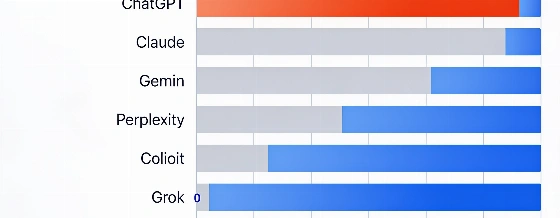
In the LLM accuracy test, ChatGPT led with 59.7% fully correct answers, but even top performers made mistakes-especially with multi-step reasoning, niche topics, or real-time questions. Claude was the most consistent, with a slightly lower accuracy rate (55.1%) but the lowest overall error rate at 6.2%. Gemini, Perplexity, Copilot, and Grok each showed distinct weaknesses, from omission of details to outright contradictions and fabrications.
Common hallucination types included fabrication, omission, outdated information, and misclassification. These errors often appear in confident, well-written language, making them harder to spot. Despite widespread awareness, 23% of marketers still trust AI outputs without review, though most teams now add extra approval steps or assign dedicated fact-checkers.
AI hallucinations occur when a model generates answers that sound correct but aren’t-such as fabricated legal citations, fake academic references, or contradictory statements. For example, a peer-reviewed Nature study found ChatGPT frequently produced academic citations that looked real but referenced nonexistent papers. In legal settings, courts have flagged a surge in AI-generated filings with made-up cases, echoing concerns raised in recent reporting on jurors’ reactions to AI transcripts in courtrooms.
Marketers report that AI errors most often surface in tasks requiring structure or precision. HTML or schema creation had a 46.2% daily error rate, full content writing 42.7%, and reporting/analytics 34.2%. Brainstorming and idea generation saw fewer issues, around 25%. The most damaging mistakes included inappropriate or brand-unsafe content (53.9%), false information (43.5%), and formatting glitches (42.5%).
Teams in digital PR (33.3%), content marketing (20.8%), and paid media (17.8%) are hit hardest by public-facing AI mistakes, which can directly impact brand reputation. More than half of marketers (57.7%) have had clients or stakeholders question the quality of AI-assisted outputs, underscoring the need for robust review processes.
Testing across ChatGPT, Claude, Gemini, Perplexity, Grok, and Copilot showed that no model is immune to hallucinations. Perplexity excelled in fast-moving fields like crypto and AI but had a 12.2% incorrect response rate. Grok struggled most, with a 21.8% error rate and only 39.6% fully correct answers. Most marketers (77.7%) accept some level of AI inaccuracy, valuing speed and efficiency but recognizing the need for human oversight.
LLMs struggled most with multi-part prompts, real-time or recently updated topics, and niche or domain-specific questions. For example, when asked to define a concept and provide an example, many models did only half the job. Questions about recent events or specialized industries often led to outdated or fabricated answers.
Warning signs of AI hallucinations include missing or broken sources, answers to the wrong question, sweeping claims without specifics, unattributed statistics, internal contradictions, and fake examples. The more complex the prompt, the greater the need for careful review.
To reduce the risk of AI errors, experts recommend always verifying sources, refining prompts for clarity, assigning dedicated fact-checkers, setting clear internal guidelines, and adding a final review layer. Treating AI as a junior assistant-never the final authority-helps prevent costly mistakes. Notably, 48.3% of marketers support industry-wide standards for responsible AI use, but 23% still skip human review if they trust the tool, a risky practice given the data.
AI’s power comes with pitfalls. Hallucinations remain a regular challenge, even with the best tools. For marketers relying on AI for content and strategy, understanding where these systems fall short is essential. Smarter prompts, rigorous reviews, and clear guidelines are key to scaling content without sacrificing accuracy. For those seeking to build more reliable AI workflows, NP Digital offers further insights and the full report on their website.