AI chat transcripts are showing up as evidence in courtrooms. But jurors may see these records as private, creating new risks for legal teams. Attorneys must rethink how they present AI conversations at trial.
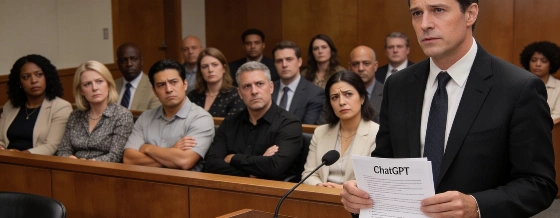
Attorneys across the U.S. are increasingly introducing subpoenaed AI chat transcripts-such as those from ChatGPT-into evidence during trials. While this approach is gaining traction, it brings a new set of challenges that many legal teams may not anticipate: juror backlash rooted in perceptions of privacy and fairness.
Recent high-profile cases have highlighted the risks. In one federal trial involving a devastating wildfire in the Pacific Palisades area of Los Angeles, prosecutors presented thousands of ChatGPT prompts from the defendant. These included diary-like reflections and requests for AI-generated images of burning forests. Although the transcripts appeared damaging, the jury deadlocked, and the judge declared a mistrial. Afterward, a juror told reporters she was disturbed by the use of the defendant’s AI chats, likening them to a personal diary and calling the tactic unfair. She noted her own use of ChatGPT and questioned the legitimacy of exposing such private conversations in court.
This reaction is not isolated. As more jurors become familiar with generative AI tools, their personal experiences shape how they interpret AI chat evidence. Many see these chats as deeply private, similar to confiding in a friend or therapist. When attorneys present AI transcripts, some jurors may feel sympathy for the defendant and suspicion toward the prosecution, potentially undermining the intended impact of the evidence.
Legal experts warn that attorneys must carefully weigh the probative value of AI chat transcripts against the risk of alienating jurors. Unlike emails or social media posts, AI conversations often feel more intimate to users. Lawyers who treat these records as routine digital evidence may misjudge juror sentiment and jeopardize their case.
To navigate this evolving landscape, leading legal strategists recommend several steps. First, attorneys should avoid assuming AI chats are a guaranteed advantage. Second, they should consider educating jurors about how such evidence is lawfully obtained, clarifying that it is not the result of hacking or surveillance. Third, AI chats should be presented as one piece of a broader evidentiary puzzle, not the centerpiece of the case. Fourth, during jury selection, attorneys should probe for potential biases or privacy concerns related to AI. Finally, legal teams should be prepared to forgo using AI transcripts unless they contain uniquely critical admissions unavailable elsewhere.
The normalization of AI chat evidence is expected to accelerate in coming years. As generative AI becomes more embedded in daily life, jurors may eventually expect to see such records in court. For now, however, the use of AI conversations remains a legal gray area fraught with psychological and strategic pitfalls.
This tension between technology and the law echoes broader debates about AI’s role in society. For instance, recent scrutiny over the use of AI in legislative processes has prompted public officials to clarify their practices, as seen when a Florida congresswoman addressed concerns about AI drafting legislative summaries in a related controversy.
Attorneys must recognize that AI chat transcripts are not just another form of digital evidence. They represent a new frontier-one where juror psychology, privacy expectations, and legal strategy intersect in unpredictable ways. As the legal system adapts, the most successful litigators will be those who anticipate juror reactions and adjust their approach accordingly.
ChatGPT, developed by OpenAI, has become one of the most widely used generative AI platforms since its launch in late 2022. By 2026, the service has amassed hundreds of millions of users worldwide, with daily active usage continuing to climb. OpenAI’s licensing terms specify that user chats may be reviewed for research, training, or legal compliance, and can be disclosed if compelled by court order. This widespread adoption and the platform’s data policies have made ChatGPT transcripts an increasingly common-yet controversial-source of evidence in legal proceedings.