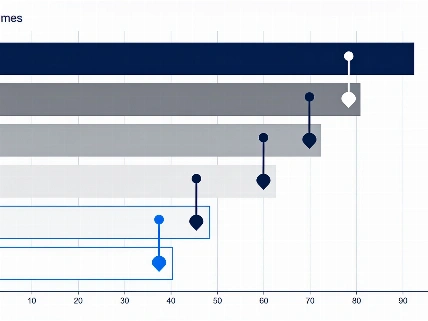
In Searchable’s study, police force websites appeared in 95.9% of crime answers, supplying 57.8% of those answers. The findings show how often AI responses to local questions rely on official information rather than reporting by local publishers.
For ChatGPT, local news sources accounted for just 0.9% of sources used, while councils and government sources were consulted for 81.3% of questions. The figures come from AI search visibility specialists Searchable. Its separate comparison of news citations found local newspapers at 21.2%, close to national newspapers at 18.8%.
Who gets cited
Among ChatGPT’s 20 most-cited news sources for local queries, Wales Online was the only local title. It ranked 18th, behind several national titles, Wikipedia and Facebook. Searchable also estimated that local issues account for up to 10% of news-related prompts.
The study used 30,000 prompts built around 20 questions for each of 100 UK towns and cities. Researchers sent them to ChatGPT and Perplexity, then tested Google Gemini, Google’s AI Mode search and AI Overviews. Topics covered crime and planning, as well as housing, roads and council decisions. Sport and local events were also included. Across the five services, 244,725 citations drew on 10,000 unique websites.
Searchable examined established local newspapers alongside less established sites that regularly publish local news. The searches returned information from an average of 12.3 websites, while the final replies used information from four. Chris Donnelly, Searchable CEO, said the process shows the competition local outlets face as AI systems search for material to answer a question.
Traffic and reach
Donnelly said one in seven searches pointed to a local news provider on average, while one in three targeted a council, police force or another official body. In most ChatGPT answers to local news queries, he said, a publication that regularly covers the story competes with as many as 16 other pages, before competitor news sites are counted.
That competition matters as publishers deal with shifting referral sources. Chartbeat figures published by the Reuters Institute show Google search traffic to publishers fell by a third in 2025 as AI-generated answers rolled out further. A report on Similarweb data found referrals from AI tools to news websites grew 770% in the year to June 2025. That increase involved large global newsbrands; Google search still sends far more visits to websites than AI platforms.
Ofcom’s latest 2026 News Report found that one in five people in the UK now use AI apps as a news source. Use was highest among people aged 25 to 34, at 37%. The figures measure adoption, while Searchable’s research tracks which sites AI tools cite. Neither establishes how much traffic local publishers receive from those citations.
Local coverage
The publisher-rights question also connects to the CMA search-choice analysis, which examined how UK treatment of Gemini and rival chatbots could affect publishers’ content. For local outlets, Searchable’s findings point to an immediate challenge: visibility in response to individual questions.
Donnelly said ChatGPT searches can narrow to a named road or a planning application number, making detailed local coverage relevant to the answers systems assemble. He pointed to topics Newsquest praised last year, saying they helped bring loyal readers back during a impressive period of subscriber growth. His case for local publishers is to cover what is happening in their own area rather than chase nationally trending stories.