A purpose-built product testing lab helped Bild Kaufberater become a leading force in commerce journalism. Its rigorous approach to testing products has fueled rapid audience and revenue growth.
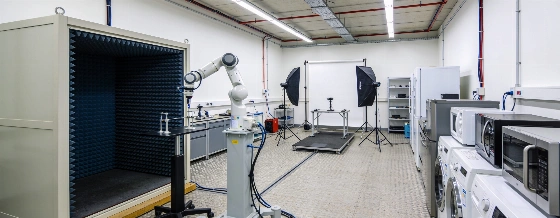
Media companies seeking new revenue streams are watching commerce journalism closely, but few have matched the scale or impact of Bild Kaufberater. By investing in a dedicated product testing laboratory inside Axel Springer’s Berlin headquarters, the publisher created a foundation for one of Europe’s most successful commerce content operations. The lab, completed in 2024/2025, features a soundproof chamber, robot-assisted test stands, a specialized photo rig, and reinforced flooring to support heavy appliances-all designed to ensure accurate, repeatable product evaluations.
Bild Kaufberater’s editorial team tests products to verify or challenge manufacturers’ claims. For example, a blender advertised with a 580-milliliter capacity was found to hold only 470 milliliters in practice. An e-scooter promising 80 kilometers of range delivered closer to 60 in lab conditions. Cordless vacuums claiming to pick up “everything” captured just 60 out of 100 grams in standardized tests. These findings are not outliers, but typical results, according to the team. The operation draws on the expertise of Computer Bild and Auto Bild, ensuring every test meets strict journalistic standards rather than marketing hype.
Unlike many commerce publishers that rely heavily on search traffic, Bild Kaufberater prioritized direct audience access from the start. The team focused on homepage placements and newsletters to reach readers directly, aiming to generate demand with timely, relevant product stories. This approach has allowed single articles-such as a comprehensive air fryer test covering 40 models-to outperform traditional news content and drive significant sales within hours.
The editorial strategy covers both high-consideration categories like electronics and appliances, using in-depth comparative testing, and impulse-driven products identified through editorial judgment and real-time data. High-visibility placements amplify these stories, creating a feedback loop where trust in content leads to action, and action drives business growth. The publisher reports that Bild Kaufberater has quickly generated a nine-digit annual merchandise volume and become a major revenue source, all while maintaining editorial independence. Manufacturers do not pay for ratings or rankings, and this policy is strictly enforced.
Bild Kaufberater’s experience suggests that investing in real testing, building direct audience relationships, and prioritizing trust can turn commerce journalism into a scalable, resilient growth engine. The initiative challenges the assumption that commerce content must compromise credibility; instead, rigorous testing strengthens trust and impact. Ultimately, the project aims to solve a core consumer problem: cutting through overwhelming choice and inflated promises to deliver reliable clarity.
Other publishers have also explored new strategies to rebuild audience and revenue after shifts in search traffic. For example, Hello! Magazine unified its data and focused on editorial independence to recover from a sharp decline in Google referrals.
Axel Springer, the parent company behind Bild Kaufberater, is one of Europe’s largest digital publishers. The company operates major brands including Bild, Die Welt, and Business Insider, and reported annual revenues exceeding €3 billion in recent years. Its investment in commerce journalism reflects a broader strategy to diversify revenue beyond traditional advertising and subscriptions.