
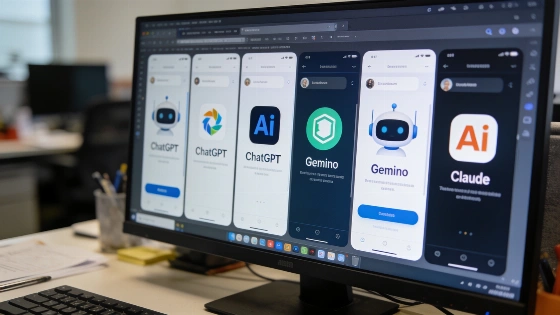
Publishers and marketers who once built their AI plans around ChatGPT now face a split market. No single chatbot controls discovery anymore. In just six months, ChatGPT’s share of AI prompt volume fell from 70% to 50%. That’s from Comscore’s Q2 2026 AI Intelligence Report. Gemini and Claude aren’t just catching up. They’re changing how AI-driven content gets seen.
Comscore’s opt-in panel data for these AI usage metrics is based on a representative sample of 500,000 to 1 million users, ensuring robust measurement of shifting platform trends.
For publishers, the impact is immediate. The days of focusing only on ChatGPT are over. Michael King, founder and CEO of iPullRank, says generative engine optimization now needs a multi-platform strategy. He tells publishers to track their visibility across all the big assistants and to stick to the basics that drive citations, not just chase whichever platform is on top right now.
Google’s AI Overviews are also changing how people get answers. The share of Google desktop searches that show an AI Overview grew from 25.8% in July 2025 to 39.4% in June 2026. This puts publisher referral traffic at risk, since more questions get answered right on the search page, skipping the usual links.
Platform shifts
According to Comscore, Claude’s desktop conversations surged from 1.1 million in October 2025 to nearly 40 million in April 2026, before settling at 22.3 million in June. This rapid growth highlights the increasing fragmentation of user attention across AI platforms.
Claude’s desktop conversations jumped from 1.1 million in October 2025 to almost 40 million in April 2026, then leveled off at 22.3 million in June. That’s a twentyfold jump in eight months. Gemini’s desktop conversations soared from 8 million to 89 million over the past year. Each assistant is pulling in a different crowd. Gemini’s growth comes from its place in the Google ecosystem. Claude’s rise is tied to its popularity with technical users.
This split looks a lot like the early days of social media, when people scattered across platforms and each one built its own style and habits. Publishers who don’t keep up risk losing both visibility and influence as user attention spreads out.
Measuring AI visibility
Comscore’s report draws a sharp line: being used as a source by an AI assistant isn’t the same as being cited. For example, Tripadvisor is used as a source in 61% of travel-related AI answers, but gets cited only 21% of the time. Sharma says old SEO metrics like site visits don’t cut it anymore. The new job is to track when an AI model uses, cites, or recommends a brand-and to see how often rivals get mentioned instead.
King breaks down AI retrieval into two steps. First, the assistant pulls in a wide set of pages (sourcing). Then it picks out and attaches citations to just a few passages. So, citation counts alone don’t tell the whole story. Publishers need to track the whole path, from retrieval to citation to actual referrals and revenue.
Original data, clear numbers, and strong signals-like author credibility-are what drive attribution. For publishers, being sourced a lot but cited rarely can be a bargaining chip in licensing talks. Companies like Forbes and Time are already using their citation rates across AI engines as a new way to attract advertisers, even though there’s still no standard for measuring AI visibility.
Operational impact
Clicks aren’t the main sign of influence anymore. Sharma points out that the real value now is whether a brand shapes the answers AI assistants give, not just how much traffic they send. As AI chatbots become a core part of how people make decisions, being cited and recommended matters more. Publishers are learning that lots of citations don’t always mean lots of referral traffic, but they do show influence in the AI discovery process.
Anyone watching AI’s rise in publishing can see these changes call for a new playbook. The split in AI prompt traffic, the need for multi-platform optimization, and the new ways of measuring visibility and influence are forcing publishers to rethink everything. As reported earlier, the industry is already wrestling with how to prove authenticity and keep authority as AI tools change the rules.
AI assistants aren’t a novelty or a side project anymore. They’re now a core part of how people look for information, make choices, and connect with brands. The winners will be those who move fast, measure what matters, and build strategies that last-no matter which platform is on top next.








