Consumer interest in smartglasses remains limited, despite high-profile marketing. Industry experts say targeting workplace and enterprise use could be the key to broader adoption. See how new use cases are shaping the future of wearable tech.
Smartglasses have become a fixture among celebrities, with viral moments like Hudson Williams sporting Meta Ray-Bans at parties and Kaia Gerber modeling Snap’s Specs. Hardware makers are betting big on consumer appeal, but so far, the numbers tell a different story. Meta shipped 7.4 million smartglasses units in 2025-a notable figure, yet still far behind the adoption rates of smartphones and smartwatches. Meanwhile, skepticism is growing online, fueled by privacy concerns and Meta’s handling of recording transparency. The company’s latest update disables the camera if users tamper with the privacy light, but backlash continues to mount, and the market remains niche.
Given these challenges, many in the industry argue that smartglasses makers should pivot toward enterprise customers. Historically, technologies like personal computers and smartphones gained traction first in professional settings before becoming household staples. Virtual reality, too, has found its strongest foothold in training and industrial applications. By focusing on productivity and workplace integration, smartglasses companies can scale up manufacturing, refine their products, and normalize the technology for everyday use.
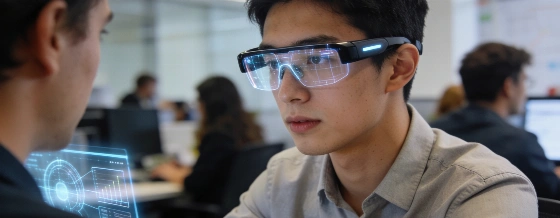
Some sectors have already adopted smartglasses, particularly in warehouses and industrial environments. Early models struggled with bulky, unfashionable designs, but recent releases have addressed these issues, making the devices more wearable. Advances in AI, display technology, and processing power are also expanding the range of practical applications. The main hurdle now is identifying the right features and workflows to build for specific industries.
Potential use cases span a wide range of fields. For example, a new fast food worker with dyslexia could follow step-by-step instructions displayed directly in their glasses, bypassing the need to read lengthy manuals. Refugees facing language barriers could benefit from real-time translation features, opening up more job opportunities. Medical professionals might use smartglasses to view ultrasound images without straining their necks, while attorneys could securely access confidential documents on the go. Investigative journalists and individuals in conflict zones could discreetly capture and share critical evidence. As these scenarios become more common, wearing smartglasses at work-and eventually outside of it-could become routine.
Currently, most smartglasses apps are simply adapted versions of smartphone software. While this helps build an initial ecosystem, the next breakthrough will likely come from applications designed specifically for the face-worn format. Companies are already moving in this direction: Google has teamed up with XReal to develop the Aura, Viture is targeting medical and research fields, and Snap is building out an enterprise division. Meta and other major players may need to follow suit to achieve lasting market success.
Recent developments in privacy-focused smartglasses, such as the introduction of camera-enabled models with modular privacy shields, highlight the industry's efforts to address user concerns and differentiate from competitors. For instance, one company has launched a product that combines advanced camera features with a clip-on privacy kit, signaling a shift toward more responsible and user-centric design. More details on this trend can be found in this coverage of privacy innovations in smartglasses.
According to Forbes, the path to widespread smartglasses adoption may depend on how well companies can serve enterprise needs before winning over everyday consumers. As the technology matures and more industries embrace wearable displays, the line between work and personal use is likely to blur.