A new generation of smart glasses arrives with a focus on privacy. Solos introduces a camera-enabled model and a modular privacy kit, aiming to challenge Meta’s dominance. Find out how these features work and what sets them apart.
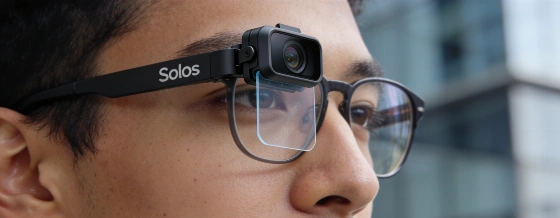
Solos has expanded its smart glasses lineup, launching two new models that put privacy and modularity at the forefront. The company, previously known for audio-only wearables, introduced the AirGo A6 and the updated Solos AirGo V2 on Tuesday. The AirGo V2, priced at $299, features a built-in camera for capturing photos and videos, music playback, and an AI-powered assistant capable of interpreting the wearer’s view. Prescription lenses are supported, and battery life ranges from 10 to 12 hours.
To address privacy concerns, Solos now offers a Privacy Kit for the AirGo V2. This $79 accessory bundle includes a clip-on shield that physically blocks the camera, allowing users to switch to audio-only mode without removing the glasses. The kit also comes with a polarized lens attachment, giving wearers more control over how and when the camera is used. However, the need to purchase and manually attach the shield may limit its effectiveness, as users must remember to engage it each time they want privacy. Critics note that nothing prevents someone from removing the shield after entering spaces where cameras are restricted.
The original Solos AirGo Vision, released in 2024, received mixed reviews, with WIRED placing it in the “Don’t Bother” category due to average media capture quality, challenging touch controls, and a demanding companion app. Despite improvements, Solos’ camera glasses still face stiff competition from Meta’s $299 Meta Smartglasses, which have set a high bar for features and usability in the market.
Major tech players are intensifying their efforts in the smart glasses space. Google and Samsung are collaborating on Android XR, with new eyewear expected from Warby Parker and Gentle Monster later this year. Apple is also rumored to be developing its own smart glasses. Meanwhile, smaller companies like Even Realities are targeting privacy-conscious consumers with camera-free designs.
Solos’ renewed emphasis on privacy follows public backlash against Meta’s camera-forward approach. Meta’s smart glasses have faced criticism for privacy risks, especially after the company quietly added-and then removed-face recognition features. Meta recently announced plans to charge for previously free features, while acknowledging demand for audio-only smart glasses. For now, Solos is betting that modular privacy options will help it carve out a niche among users wary of always-on cameras.
Founded in 2016, Solos is a U.S.-based wearable technology company specializing in smart eyewear. The company has focused on integrating modular hardware and AI-driven features, aiming to differentiate itself in a market dominated by larger players like Meta and Google. Solos has raised over $20 million in funding and continues to expand its product offerings to address evolving consumer privacy concerns.