Advertisers see strong potential in combining Digital Out of Home and Retail Media. Yet most campaigns are still planned separately. Strategic and technical barriers persist.
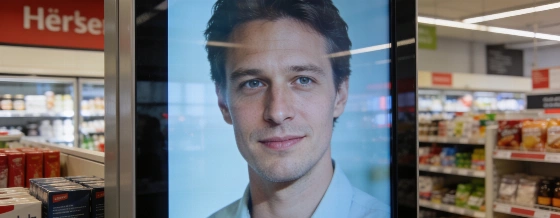
For media and advertising professionals, the integration of Digital Out of Home (DOOH) and Retail Media promises to reach consumers across the entire customer journey-from public spaces to the point of sale. Despite widespread agreement on the value of this approach, most campaigns in Germany are still planned and executed separately, according to Andreas Knorr, Director Marketing WallDecaux.
Industry players, including retailers, agencies, and DOOH marketers, frequently discuss the synergy between these channels. However, Knorr points out that the lack of unified planning standards and reliable measurement frameworks keeps the two media types siloed. Studies have shown that multiple touchpoints can significantly increase purchase likelihood, but when DOOH roadside and instore are managed independently, advertisers miss out on potential impact they have already paid for.
Knorr identifies the main obstacle as strategic, not technological. There is still no shared understanding of the specific roles each touchpoint should play within a campaign. Questions remain about whether DOOH instore should boost mental availability just before purchase or deliver the final push with price and promotion messages, and whether DOOH roadside should prime audiences for later in-store engagement or simply build reach. While successful case studies exist, the industry lacks robust planning standards and clear KPIs for each stage of the funnel.
Operational challenges follow strategic ones. Integrated planning requires both technological and organizational alignment, but current systems are fragmented. DOOH and Retail Media often use separate platforms, ad servers, and booking processes, leading to manual coordination and inefficiencies. Although some supply-side platform integrations are emerging, a true market standard has yet to develop. Organizationally, responsibility for DOOH and Retail Media often falls to different departments, budgets, or even agencies, making unified campaigns difficult without shared processes and budget logic.
Measurement remains a sticking point. Retail Media can track sales uplift and basket development at the point of sale, while DOOH can demonstrate reach and brand impact in public spaces. What is missing is evidence of the combined effect across the full funnel. Knorr suggests that even regional A/B tests could help prove the incremental value of integrated campaigns. This kind of proof will determine whether such campaigns become standard practice or remain experimental. He argues that advertisers, agencies, and marketers must collaborate on a measurement framework that unites branding and sales KPIs.
International examples show what is possible. In the UK, Tesco and JCDecaux link DOOH campaigns with transaction data to provide credible impact evidence. Such cross-channel benchmarks are rare in Germany but could be the key to moving integration from pilot projects to the mainstream media mix. As highlighted in a related report on how publishers are leveraging AI visibility to attract advertisers, measurement and standardization are increasingly central to media buying decisions (see analysis here).
Knorr concludes that the infrastructure for integration is already in place, with programmatic DOOH inventory, robust instore networks, and retailer loyalty data available. He believes a joint pilot led by advertisers, agencies, and marketers would advance the market more than additional whitepapers. Ultimately, the decision to prioritize integration rests with advertisers who control the media investment and can drive the shift from consensus to action.