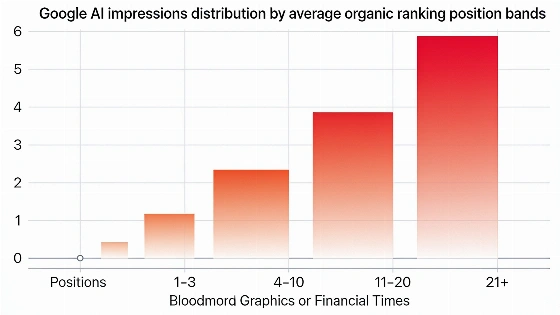
Google’s AI-powered search features have changed the rules. Pages that sit at the top of organic results often miss out on prime spots in AI Overviews and AI Mode. That’s not what most SEO pros expected.
By August 31, 2026, Google had expanded its Generative AI report in Search Console to all websites globally, allowing webmasters to track AI Overviews and AI Mode impressions for the first time.
Data that breaks old SEO habits
The analysis looked at 891 URLs that appeared in both organic and AI datasets. Every one of the top 100 AI-visible pages was also in the top 1,000 organic export. But only 57% of those held an average organic position in the top 10. Some of the most AI-visible URLs ranked much lower. One top-20 AI page averaged a position above 35. The spread of AI impressions was even more surprising. Nearly 69% came from pages with average positions between 4 and 10. Just 0.35% came from positions 1 to 3.
The numbers break the old idea that higher organic rankings always mean more AI visibility. AI Overviews and AI Mode pick content for other reasons. A PPC Land report explains that the new Search Console panel tracks AI Overviews and AI Mode impressions as a separate metric. It breaks down data by page, country, device, and date. But it doesn’t show clicks or queries.
Brand and usefulness matter most
What set the top AI pages apart? Two things: brand-topic association and how useful the content was. Pages that led in AI visibility were often tied to the product or topic where the company already had a strong brand and outside recognition. This wasn’t just in the AI report. It matched the company’s wider digital footprint-third-party mentions, industry links, and repeated online references.
Independent reviews confirm that the Generative AI report in Search Console aggregates impressions from both AI Overviews and AI Mode into a single metric, without revealing clicks or positions. This means that even a high organic ranking does not guarantee visibility in AI-generated answers.
Spotting overperformers and underperformers
The analysis used an “AI overperformance index.” This is the ratio of a page’s share of AI impressions to its share of organic impressions. Pages with an index above 1 punched above their weight in AI visibility. Those below 1 lagged behind. Out of 435 qualifying URLs, overperformers included guides, product explainers, and destination pages with unique, usable info. Underperformers were often high-traffic pages where AI answers didn’t match what users wanted.
This approach changes the game for publishers. Instead of chasing higher rankings for every page, the focus shifts. Now it’s about which content types and brand signals actually drive AI exposure-and whether that fits business goals.
SEO can’t buy AI visibility
The data is blunt. Organic SEO still matters, but it’s not enough for AI search visibility. The best AI exposure clustered around pages and topics where the brand was already strong and backed by outside signals. Adding FAQs or tweaking headings might help a little. But these tricks can’t replace a company’s reputation or its repeated association with a subject across the web.
For content teams, the new Search Console data is a diagnostic tool. It’s not a simple checklist. It shows where organic performance, content value, brand association, and reputation come together to drive AI visibility. Treating AI Overviews as just another ranking target misses the point.
Here’s the new reality. Google’s AI search features reward not just technical SEO, but what a company is known for and the real value its content brings. The path to AI visibility runs through brand credibility and true expertise. Not just small ranking bumps. For those who invest in reputation and real utility, the payoff in generative search is real. It’s now a core part of digital strategy.