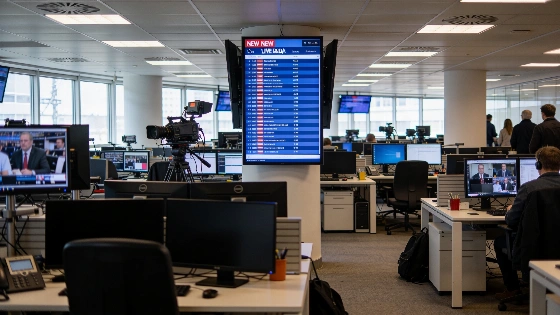
The Drum has tossed out the usual conference script. For two days, its London Labs headquarters becomes a working newsroom, open to anyone in the industry. The editorial process is on full display. Guests don’t just watch-they join in. They sit in on meetings, argue over which stories matter, and help decide what gets covered. Everything happens live, on camera, and across digital channels.
The Drum Live ran as a 48-hour newsroom operation from its London home, with real-time editorial meetings and publishing open to both industry guests and the public.
Sessions stream live on thedrum.com and YouTube. Every panel, interview, and debate feeds straight into the site’s real-time coverage and social channels. The newsroom is open for drop-ins. Guests can see how stories are reported, filmed, and published as it happens. Even the editorial decisions are made in the open. Few media brands have tried this at such a scale.
The event kicks off with Claudine Collins, chief client officer at Mail Metro Mail and known from The Apprentice. She talks about how the media world is changing and what it’s like to move from agency to media owner. Next, the focus shifts to the CEO/CMO Confidence Crisis. The panel digs into the tension between chief executives and marketing leaders, and what CMOs need to prove now that growth and measurable results are expected. A follow-up piece from The Drum, published September 23, 2026, says the live debate stressed how CEOs and CMOs must keep their priorities in sync as business conditions change.
Reuters did not return a directly relevant independent report on The Drum Live itself, so no third-party wire confirmation of the event’s format, participants, or outcomes could be verified from the available material.
On day two, new research looks at the growing gap between brands and agencies. The Drum hosts an Oxford-style debate on whether AI in marketing should be left to the market or regulated. Jo Pettifer from Salesforce talks about the rise of the ‘A-shaped CMO’. Adam Field, marketing boss at Berghaus, explains how an old outdoor brand can still act like a challenger. Other sessions cover how creators drive results, long-term brand building with Center Parcs CMO Sara Holt, and the challenge of marketing Baileys, a brand that does most of its business around Christmas.
Partners like Kantar, Rokt, Monks, LiveRamp, Jack Morton, LTM, Defyner, and monday.com help make this newsroom experiment possible. There’s no waiting for a recap. Stories, videos, and social posts go out as soon as things happen. Whether you’re in the room or watching online, the newsroom’s output is the event.
This model is similar to what the Library Newsroom Project has done, letting community members shape local news from inside public spaces. The Drum brings this idea to the marketing world, letting decision-makers-not just observers-help steer the editorial process in real time.
By making its newsroom open and interactive, The Drum is testing how far audience involvement and editorial control can go. It’s a risk. Letting outsiders into the editorial process could blur focus or bring in new biases. But it also means coverage can be more responsive and relevant. For publishers and content leaders, the message is simple: real-time teamwork and open editorial rooms are no longer just ideas. They are working models that can grow audiences and boost industry influence-if done with care and discipline.