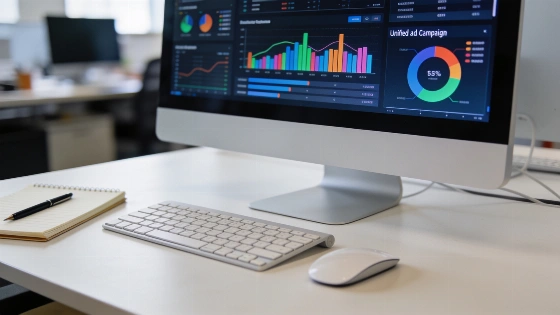
Google Ads users can now see the whole customer journey in one place. Google has launched unified reporting for AI Max, putting every step-from search to purchase-on a single dashboard. Advertisers no longer have to piece together scattered reports. Now, they can check the impact of AI Max on their campaigns and make decisions with all the data in front of them.
Google renamed the classic Search Terms View to 'Search terms and ad combinations' in 2026, reflecting a broader shift to connect queries, ad headlines, and landing pages in reporting.
AI Max is more than just a reporting upgrade. It marks the next step in Google’s automation push. AI Max will fully replace Dynamic Search Ads (DSA), a format that has been around for over ten years. DSA let advertisers target users without keywords, using Google’s scan of website content to match ads to searches. Now, Google says DSA will be retired. The last automatic switch to AI Max is set for February 2027. This follows the September 2026 start of auto-upgrades for campaigns using automatically generated assets and campaign-level broad match, as industry analysts have reported.
AI Max keeps what worked in DSA but adds more control and accuracy. Advertisers can mix their own creative assets and website content with Google’s data. The AI can then find new queries and fine-tune targeting. Google says this prepares campaigns for a future where AI shapes how ads are set up and how audiences are found. In its blog, Google says the new unified report helps advertisers "better understand how customers interact" and "validate the strategic value" of AI Max. The focus is on transparency and measurement.
Independent industry reports indicate that auto-upgrades for campaigns with automatically generated assets and campaign-level broad match began in September 2026, while the migration of Dynamic Search Ads was postponed to February 2027.
Google is also making its AI tools available to more people. The AI Brief feature, which lets marketers set campaign messaging and creative direction, now works in seven more languages: Dutch, French, German, Italian, Japanese, Portuguese, and Spanish. AI Brief, powered by Gemini, lets advertisers set guidelines and audience targeting in their own language before launching a campaign.
On the creative side, Google has added two new text-to-speech models to the Gemini family. "Gemini 3.8 Flash TTS" is built for deep creative direction and character work. "Gemini 3.8 Flash-Lite TTS" is made for high-volume, efficient output. These models help creators, developers, and businesses make more expressive audio, with immediate use in tools like Gemini Notebook and Google Vids.
As Google retires old ad formats and manual targeting, advertisers are being pushed toward AI-driven tools. This matches what’s happening across the industry, as shown in recent coverage of platforms using predictive AI for ad targeting. The effect is clear: marketers who move quickly to these new tools will see better campaign results and clearer reporting.
Google’s overhaul of its ad platform marks the end of keywordless legacy formats and scattered analytics. By bringing reporting together and adding more AI-powered creative tools, Google is betting that advertisers want both transparency and automation. With DSA gone and AI Max taking over, the new standard is unified data, advanced controls, and the power to steer campaigns with precision. Advertisers who wait risk falling behind as AI-driven models become the norm in search advertising.