
Hundreds of Scripps journalists are out as the company pivots to anchorless, AI-powered news streams. Staff and viewers question whether automation can replace trusted local reporting.
Scripps executives recently cut 268 jobs and replaced live anchors with automated news streams in a dozen markets. For viewers from Texas to Maryland, the familiar faces who delivered daily news are gone, swapped for loops of pre-recorded segments and algorithm-driven graphics. Company president Adam Symson calls it a "refounding." Many inside Scripps see it as something closer to erasure.
The reaction has been immediate and public. WMAR’s Kelly Swoope, Megan Knight, and Randall Newsome posted a farewell video to Baltimore viewers, calling it the end of an era. KXXV’s Bobby Poitevint in Texas thanked his community, admitting the day was "not easy." These departures highlight what’s changing: Scripps is removing the human element from local news, betting that automation and AI can fill the gap left by anchors, producers, and editors.
Scripps has already launched its anchorless, AI-supported newscast model in about a dozen markets, including Baltimore and Corpus Christi, replacing traditional live broadcasts with pre-recorded segments and automated transitions.
Inside the company, staff describe the layoffs as a "devastating blow." Some question whether Scripps can still claim to serve its local communities. One former employee called the move "totally backward," especially as local news options shrink nationwide. The company’s AI ethics guidelines prohibit generative AI for scriptwriting and article composition only "generally," leaving room for experimentation-and, as some staffers note, for mistakes.
Here’s how the new model works: At stations like WMAR, live morning and evening newscasts have been replaced by continuous streams of pre-recorded stories, stitched together by graphics instead of human hosts. There’s no banter, no live transitions, and no one to announce commercial breaks. Critics warn this could be dangerous in a crisis. Veteran journalist Charles Jaco said the approach leaves audiences exposed during breaking news. Luke Russert, referencing the anniversary of 9/11, questioned whether bots will soon be tasked with relaying evacuation orders.
In Texas, including at KRIS and KXXV, layoffs were directly tied to the rollout of AI-powered 24/7 streaming news, with many of the eliminated positions coming from reporting, producing, and technical roles. Scripps claims the new model will strengthen field journalism and content distribution across broadcast, streaming, and social platforms, but industry observers note significant concerns about the loss of local presence and the ability to respond to emergencies.
Symson, in a memo to staff, defended the restructuring as a way to "create connection through trusted news and information," promising that anchors would remain in many mid-to-large markets. Still, the plan is to expand the 24/7 streaming model to all local stations, adapting to each market’s needs. A spokesperson said the strategy isn’t "one-size-fits-all," but the direction is clear: automation is moving in, and people are moving out.
For those still at Scripps, the message is blunt. Symson told staff the company must become a "technology-forward company," with AI and automation at its core. He argued that new systems, designed by Scripps employees, would allow for deeper local coverage. But the company’s guidelines put the burden of fact-checking and editorial responsibility on individual journalists, even as their numbers shrink. Some see this as a setup for ethical lapses, especially after other publishers, like McClatchy, have struggled with AI integration.
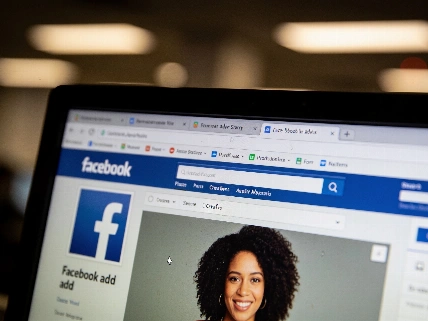
Public reaction has been swift. After layoffs at KRIS 6 in Corpus Christi, multimedia journalist Andrew Bishop told viewers that AI played "ZERO role" in his reporting, emphasizing that he writes his own scripts and conducts his own interviews. Meanwhile, current and former Scripps employees shared a Facebook post from ex-WMAR reporter Megan Pringle, who argued that replacing people with formats "kills connection to the community."
Scripps frames its AI push as necessary to survive the battered economics of local TV. The company’s guidelines allow Scripps to approve unspecified AI tools for "research and ideation," provided journalists verify outputs. But with so many roles eliminated, the promise of "strengthening connection" rings hollow for many on the ground. As one staffer put it, you cannot replace people with a format and call it an investment in local news.
Other major publishers are also experimenting with AI-driven content strategies. For example, as reported earlier, USA Today Co. has tested AI-optimized article formats to boost licensing and discoverability, tracking which bots access its site. But Scripps’ move to strip anchors from the broadcast entirely is a more radical break with tradition-and a riskier gamble with audience trust.
According to Press Gazette, Scripps CEO Adam Symson has positioned the changes as a technological transformation rather than just a cost-cutting measure, stating the company aims to become a "technology-forward, AI-powered broadcast journalism company." The anchorless format, already in place at WMAR in Baltimore and KRIS in Corpus Christi, features pre-recorded reports, national content, and automated graphics instead of traditional studio hosting. This shift has drawn criticism from industry observers and former staff, who warn of the risks to local news quality and crisis coverage.
As reported by NewscastStudio, the restructuring in Corpus Christi and other markets is part of a broader Scripps strategy to reallocate resources toward field journalism and multi-platform content distribution. However, the move has also led to concerns about the erosion of local identity and the ability to maintain trusted community connections, especially as previous rounds of layoffs and newsroom closures have already reduced Scripps' local news footprint.
Founded in 1878, Scripps is now one of the largest local TV station owners in the United States, operating dozens of stations across the country. As of 2025, the company reported annual revenues exceeding $2.3 billion, with a workforce that, before the recent layoffs, numbered over 4,500 employees. The company’s aggressive shift toward AI-driven news delivery comes as traditional TV advertising revenue continues to decline, forcing legacy broadcasters to look for new business models to stay afloat in a digital-first era.