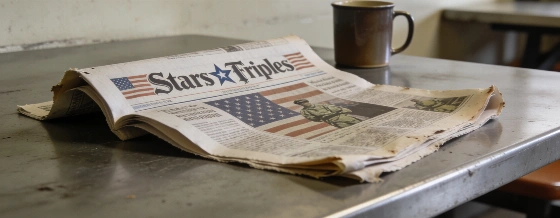
After critical reporting, Pentagon officials fired top Stars and Stripes staff, exposing the fragility of editorial independence in government-funded media.
In August 2026, the Pentagon abruptly fired Stars and Stripes’ publisher, editor, and a frontline reporter. The move sent a message to any newsroom dependent on government support: editorial independence lasts only as long as those in charge are willing to protect it. The firings followed a series of investigative stories about poor conditions aboard the USS Abraham Lincoln and the disarray faced by military families evacuated from Bahrain-coverage that reflected poorly on Defense Secretary Pete Hegseth and his team.
On August 21, 2026, Stars and Stripes staffers Max Lederer, Erik Slavin, and Lara Korte received official termination notices, with the Pentagon citing insubordination and policy violations as grounds for dismissal.
The Pentagon’s recent actions have made clear that funding and independence do not always coexist. Officials justified the firings by citing insubordination and unauthorized media appearances, but these explanations came only after Stars and Stripes published detailed accounts of worsening conditions on the USS Abraham Lincoln during its extended deployment in the U.S.-Iran conflict. Reporter Alison Bath, based in Naples, Italy, documented shortages of food and water, mail delays, and serious mental health struggles among sailors, including at least one overboard incident. Her reporting drew on interviews and public social media posts from crew members and their families.
Lara Korte’s coverage of the Bahrain evacuation highlighted the Pentagon’s lack of preparation and support for military families. She included audio from a Navy town hall where an admiral admitted the military was in “uncharted territory.” The Pentagon did not dispute her facts, but Korte was fired along with editor-in-chief Erik Slavin and publisher Max Lederer. Bath remains on staff, but the message to the newsroom is clear.
Editorial firewall breached
In March 2026, the Pentagon issued new directives mandating that Stars and Stripes content must be consistent with military order and discipline, and in September 2026, Navy Captain William Urban-who lacked prior journalism experience-was appointed as deputy publisher, intensifying concerns over editorial autonomy.
Chief Pentagon spokesperson Sean Parnell described the changes as an effort to “refocus” the outlet away from “woke distractions that siphon morale.” The firings led to a lawsuit by the ousted journalists, who allege retaliation for critical coverage and violations of both free speech rights and Defense Department policy. Their legal team also represented Voice of America employees dismissed during the Trump administration’s 2025 attempt to dismantle that outlet.
On August 28, 2026, former publisher Max Lederer, editor-in-chief Erik Slavin, and reporter Lara Korte filed suit, arguing that their removal followed their reporting and interviews about editorial independence and conditions aboard the USS Abraham Lincoln. According to a CNN report on the court filings, the Pentagon cited insubordination and rule violations due to statements made in CBS interviews as the reason for Slavin and Korte's dismissals, while Lederer was cited for refusing to deliver termination notices to other staff.
Retired Army Lt. Gen. Mark Hertling, writing in The Bulwark, argued that no official communications office can create the credibility that comes from independent reporting. He credited Stars and Stripes’ early coverage of the USS Abraham Lincoln for providing information that official channels would not.
Legal and political fallout
On September 4, 2026, federal judge Trevor McFadden denied a request for a temporary restraining order, allowing the Pentagon to proceed with the dismissals. In his decision, McFadden wrote that the plaintiffs were unlikely to prove a First Amendment violation and said that "Stars and Stripes’ editorial independence is not at stake here," attributing the firings to official interviews given to CBS rather than private political views, as detailed in The Guardian's coverage of the ruling.
This crisis comes as local and national newsrooms across the U.S. are disappearing, and policymakers are testing public funding models to fill the gap. In 2026, states are projected to spend $74 million on local journalism through fellowships, training, and tax credits, according to Rebuild Local News. Supporters point to European and Australian models where government-funded outlets maintain public trust, but only when political interference is kept out.
The Stars and Stripes episode shows that even the strongest editorial firewalls can fail when political leaders intervene. The risk is not hypothetical: the Trump administration’s repeated attacks on public, nonprofit, and for-profit media have already forced newsrooms to defend their independence in court and in public. As reported earlier, some industry leaders are turning to technology and new funding streams to stabilize local news, but no model is immune to political pressure.
For publishers and journalists, the lesson is direct. Government funding can provide stability, but it cannot guarantee editorial freedom unless leaders-military or civilian-are willing to accept critical coverage as the cost of a free press. When that principle is abandoned, credibility collapses, and the audience loses the only journalism that can hold power to account from inside the system. The Pentagon’s purge at Stars and Stripes is a case study in how quickly independence can disappear when funding and politics collide.