
Retail media giants are fighting for advertiser budgets by showcasing exclusive data and new campaign formats. Marketers face a crowded field of platforms promising measurable results and deeper consumer insights.
Retail media networks have moved beyond simply selling ad space. At a recent showcase in New York City, major players like The Home Depot, PayPal, and DoorDash presented their latest strategies to attract advertiser budgets: exclusive data, broad reach across channels, and a focus on measurable results. For publishers and marketers, the competition is about who can offer the most useful consumer data and deliver clear outcomes-those are the networks shaping the future of commerce-driven advertising.
Established retailers and financial companies are using years of transaction data to appeal to brands looking for precise targeting. The Home Depot’s Orange Apron Media says brands advertising alongside its own see a 30% increase in trust and a 40% rise in purchase intent. Chase Media Solutions points to $1.9 trillion in annual debit and credit sales as a way to track changing consumer habits and loyalty. PayPal Ads, with its view across shopping and payments-including Venmo-positions itself as the only network able to follow and influence buyers across multiple merchants, not just within a single retailer.
"In 2026, eMarketer estimated that ad spend through retail media networks on social platforms reached only $1.3 billion, highlighting how small this segment remains compared to the broader retail media market."
eMarketer
Specialty and e-commerce platforms are also stepping up. DoorDash, now handling billions of orders each year, is analyzing its data to spot trends-like a 30% jump in health food orders on Tuesdays and more toothbrush sales on weekends. Instacart is promoting its Carrot Ads technology to bring together grocery retail media, arguing that a shared system helps both brands and retailers. Chewy Ads, with 84% of sales on automatic subscription, highlights its strong connection with pet owners for marketers seeking loyal, repeat customers.
Content is another area of competition. Albertsons Media Collective is moving past price-focused ads, adding branded micro-sitcoms like Rico’s Tacos into the shopping experience and reporting ad performance well above benchmarks. Macy’s Media Network uses its reputation for milestone shopping-weddings, graduations, holidays-to help brands shape demand. Dick’s Media is focusing on the youth sports market, citing survey data that 84% of parents say youth sports affect their purchases, and offering access through its GameChanger streaming network.
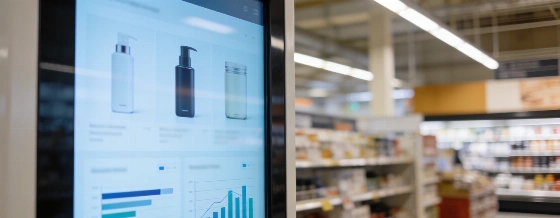
Retail media networks are under pressure to prove that their campaigns drive real, incremental results and work across different platforms. Executives like Arun Ramaswamy of The Home Depot and Peter Giordano of DoorDash say that measurement and outcome-based campaigns are now essential. Walgreens Advertising Group, after restructuring, is installing digital screens in 1,200 stores to connect merchandising, media, and marketing for better returns. H-E-B, which serves 8 million Texas households each week, is investing in planning tools to make its retail media platform more accessible and data-rich for advertisers.
"By September 2026, industry reports highlighted that retail media networks were intensifying their differentiation strategies through enhanced measurability, omnichannel capabilities, and the use of first-party data. At a New York presentation, Home Depot, PayPal, and DoorDash specifically emphasized these competitive advantages to advertisers."
Modern Retail
For marketers and publishers, the growing number of retail media networks means more choices-and more complexity. Each platform claims a unique advantage, whether it’s scale, data, or new content formats. But the real question is whether these networks can actually deliver measurable, cross-channel impact. As seen in recent campaigns, blending storytelling, shoppable content, and real-world events is now expected, not a special feature.
The competition is pushing every network to sharpen its pitch and back it up with solid numbers. Generic ad placements are no longer enough; brands want proof that their spending leads to real results throughout the customer journey. Networks that can’t provide clear measurement, useful insights, and smooth integration across channels will fall behind. In this environment, only those able to combine scale with precise targeting are likely to stay ahead as commerce media continues to consolidate.
According to an ICE Global News industry overview, U.S. retail media ad spend is projected to reach $71.09 billion in 2026, up from $60.32 billion in 2025, continuing a trend of double-digit growth.
PayPal, a key player in this space, reported over 400 million active accounts worldwide as of 2025. The company processed more than $1.6 trillion in total payment volume last year, reflecting its reach across e-commerce, peer-to-peer payments, and merchant transactions. Its acquisition of Venmo has expanded its presence among younger consumers and broadened its data assets, making PayPal Ads a strong competitor in the retail media market.