
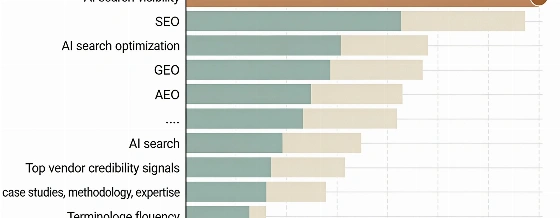
Most marketing teams are investing in AI search visibility, yet 81% still use the term SEO for these efforts. New research reveals how budgets are shifting, what language buyers trust, and why clear results matter more than buzzwords.
The rapid rise of AI-powered search is reshaping how brands approach online visibility, but most marketers are sticking with familiar language. According to a new survey of 343 U.S. marketing decision-makers by Fractl, 81% still refer to their AI search strategies as SEO, despite a growing list of new acronyms like GEO, AEO, and LLM optimization circulating in industry circles.
While industry insiders debate terminology, the research shows that buyers prioritize clarity and measurable outcomes over jargon. Only 27% of marketing teams have formally adopted a term beyond SEO for their AI search work, and nearly half have looked up unfamiliar terms after seeing them used by peers or competitors. Excessive buzzword use without clear explanation was cited as the top vendor red flag by 36% of respondents.
Language vs. Results
Senior leaders are more likely to experiment with new terms-36% of directors and C-suite executives say their teams have moved beyond SEO-but even among this group, 56% admit to researching unfamiliar vocabulary. For most marketers, the focus remains on results: 70% would search for either “AI search optimization” or “SEO” when seeking help online, and only a minority use newer acronyms in practice.
When evaluating vendors, marketers overwhelmingly favor substance over style. Case studies with measurable results were the top credibility signal (34%), followed by clear methodology (22%) and team expertise (15%). In contrast, only 9% valued terminology fluency. The biggest turnoff? Heavy use of buzzwords without explanation, followed by a lack of case studies or vague performance claims.
Budgets Shift, Strategies Lag
Despite unsettled terminology, budgets are moving fast. On average, marketers now allocate 24% of their search or content budgets to AI search visibility. A full 82% have committed at least some budget, and 43% are investing more than 20%. SEO and performance marketing teams are leading the way, likely because they are first to notice shifts in impressions, rankings, and traffic quality.
The main challenge isn’t measurement, but keeping up with the pace of change. Twenty-eight percent of marketers cited the speed of the evolving landscape as their top concern, ahead of tracking performance in AI-generated results or choosing which AI platforms to prioritize. Platform focus is fragmented: 34% prioritize ChatGPT, 16% Gemini, 6% Claude, and 5% Copilot or Bing AI, while only 1% named Perplexity. Fourteen percent haven’t picked a primary platform yet.
Discovery and Trust in the AI Era
AI search is now part of the vendor discovery process itself. Two-thirds of marketers have used AI tools like ChatGPT, Perplexity, or Gemini to research agencies or vendors. Adoption is highest among SEO specialists (89%), performance marketers (84%), and C-suite leaders (81%). When searching for AI search solutions, marketers are just as likely to start with AI tools or peer recommendations (34% each) as with traditional channels like Google or LinkedIn (22%).
This feedback loop means agencies must audit not just their Google presence, but also how they appear in AI-generated answers and peer communities. Marketers are encouraged to track which prompts buyers use, how their brand and competitors are represented across platforms, and which sources shape those answers. The strongest vendor pitches now focus on showing where AI search is already influencing discovery, which platforms matter most, and what actions can improve visibility.
For a closer look at how AI platforms are shifting their source preferences, see this analysis of Reddit’s declining share in ChatGPT search citations.
Visibility Over Vocabulary
The research underscores that vocabulary is not strategy. Marketers continue to use familiar terms and reward vendors who provide clear, actionable proof of results. As AI search tools become a standard part of the discovery process, the winners will be those who make their expertise and outcomes easy to find and understand-across both traditional and AI-driven channels.