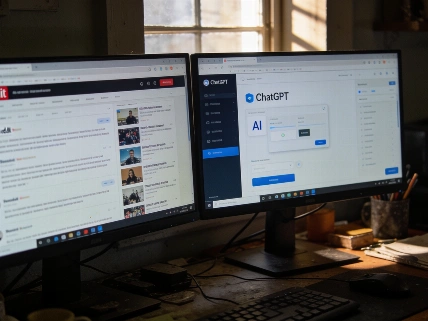

AI bots are targeting publisher content. Le Monde is fighting back with advanced bot management and new licensing deals. The French newsbrand is seeing fresh revenue and stronger content protection.
Le Monde is taking aggressive steps to protect its journalism from unauthorized AI bots, while also capitalizing on new licensing agreements with major large language model platforms. For publishers focused on subscription and advertising revenue, the stakes are high as bot traffic threatens both business models and editorial integrity.
The French news organization has signed licensing deals with OpenAI, Perplexity, and Meta, allowing these platforms to use Le Monde’s content to power their AI-driven services. According to company executives, these partnerships have generated significant new revenue streams, both from direct payments and from new subscribers arriving via the AI platforms.
At the same time, Le Monde is investing heavily in technology to block 'bad bots'-unauthorized crawlers and scrapers that attempt to bypass paywalls, steal content, or disrupt user accounts. Paul Laleu, Le Monde’s chief technology officer, leads the effort to identify and stop a range of malicious bot activities, including credential stuffing and large-scale web scraping.
Laleu explained that attackers often try to impersonate legitimate services like Google, or even purchase subscriptions with stolen credit cards to redistribute content. To counter these tactics, Le Monde relies on advanced bot management tools, working closely with the edge cloud platform Fastly. These tools analyze traffic patterns to distinguish between legitimate bots, such as those used for search engine indexing, and malicious actors.
Fastly’s platform enables Le Monde to detect and block non-human behavior before bots can interact meaningfully with the site. The system’s configurability allows the publisher to apply nuanced policies, ensuring that essential crawlers are not blocked while unauthorized bots are stopped at the edge.
Le Monde also deploys creative defenses, such as generating decoy content mazes designed to exhaust unauthorized scrapers and divert them from real articles. This approach makes it increasingly difficult for AI-driven hackers to access valuable journalism.
Another area of concern is the distribution of stolen content via messaging platforms like WhatsApp, where hackers share publisher content in PDF form. Laleu noted that this practice affects publishers worldwide and remains a persistent challenge.
To further secure its subscription model, Le Monde has changed its payment process to ensure that access to content is only granted after payment is fully processed. This adjustment has reduced the risk of bots exploiting trial access or using stolen payment credentials.
Legal action against offshore hackers is often ineffective, so Le Monde prioritizes daily automated defenses to make content theft more difficult and less attractive. Laleu emphasized the importance of using a flexible, responsive platform to keep pace with rapidly evolving AI threats.
For additional perspective on how publishers are defending journalism and press freedom, see this report on recent Supreme Court actions impacting journalists.