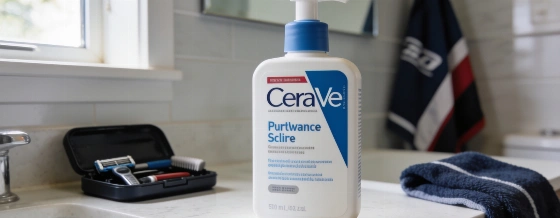
L’Oréal is using AI to create a CeraVe campaign aimed at men in Australia and New Zealand. The company worked with Springboards to quickly generate original taglines and creative concepts.
L’Oréal wanted to connect with male consumers for its CeraVe skincare line in Australia and New Zealand-a group the brand had rarely targeted before. Instead of another round of traditional brainstorming, the company turned to Springboards, an Australian AI startup, to help generate campaign ideas that might actually speak to men.
In September 2026, South Australia launched a parliamentary inquiry into men's health, addressing issues such as suicide rates, mental health, and the stigma around seeking support.
Springboards’ approach was different from the usual. By adjusting the "temperature" of its AI model-making word choices less predictable at key points-the platform produced a stream of taglines and concepts that avoided the usual clichés. L’Oréal’s team worked with these outputs in real time, refining prompts and giving feedback until they settled on a campaign direction.
In just two weeks, L’Oréal generated forty campaign ideas, each tailored to local tastes and the male audience. The timing was deliberate: the campaign launched during the playoffs for Australia’s national football and rugby leagues, putting CeraVe in front of sports fans. Taglines like "Your skin’s only bodyguard" and "The ceramide squad" came out of this process, but the final choice-"CeraVe, Your Skin Barrier’s MVP"-was the result of both AI suggestions and human review.
AI as a creative tool
The CeraVe campaign in Australia and New Zealand was specifically aimed at a male audience, a demographic previously not directly targeted by the brand. L’Oréal characterized this as an effort to break through traditional beauty marketing approaches.
Georgia Hack, L’Oréal’s chief digital and marketing officer for Australia and New Zealand, said the variety and brand fit of Springboards’ outputs were key. The AI didn’t decide the final creative, but it sped up brainstorming and gave the team more options, letting them move from idea to launch in weeks instead of months.
For content and publishing teams, the lesson is clear: AI isn’t just for automating routine work. Used well, it can help creative teams move faster, especially when deadlines are tight or old approaches aren’t working. The CeraVe campaign’s quick turnaround and targeted messaging show how AI can help brands reach new audiences and improve results.
Strategic shifts and industry impact
L’Oréal’s choice to work with Springboards came out of its Big Bang Beauty Tech Innovation Program, which started in Australia and New Zealand in 2025. Springboards didn’t win the competition, but its Flint model impressed L’Oréal enough to get a trial. The partnership shows that even big brands are open to working with smaller AI startups if the technology can deliver real creative benefits.
The campaign’s focus on sports was intentional. Springboards’ data showed that sports were a major interest for the target male audience, so the campaign was timed to match major national sporting events. This level of targeting and speed would have been hard to achieve without AI-driven ideas.
For other marketers, the message is that generic creative is on the way out. As AI models get better at using brand and local market data, the advantage will go to those who use these tools for fast, varied output. The CeraVe campaign’s forty unique ideas in two weeks set a new standard for digital marketing workflows.
Recent advances in AI-powered content verification, like those described in earlier reports, show that AI is being integrated into creative and editorial work across the industry, not just in marketing but also in fact-checking and newsrooms.
L’Oréal’s approach stands out for not letting AI outputs become the final product. Instead, the technology is used to spark ideas, with human teams making the final decisions on message and brand. This mix-AI for ideas, humans for curation-will likely shape how brands develop campaigns and content as they try to cut through audience fatigue and platform noise.
Springboards, based in Australia, has quickly become a challenger in the creative AI field. While it didn’t win L’Oréal’s innovation program, its Flint model’s adoption by a global brand points to growing demand for AI tools that offer both speed and originality. As of 2026, Springboards has worked with several brands in the region, and its technology continues to focus on high-variation outputs and deep brand integration to meet the needs of modern marketing teams.