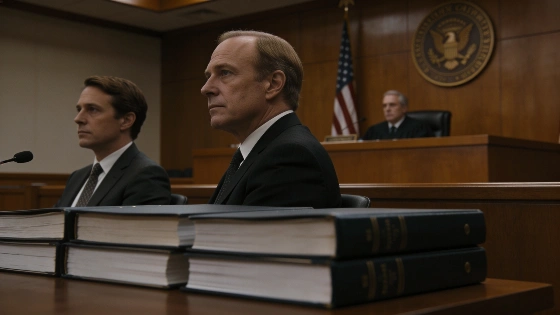
At a hearing on Oct. 21, 2026, in San Jose, California, U.S. District Judge Eumi K. Lee focused on a key fair-use factor: whether alleged copying affects the market or value of the original work. Lee pressed Anthropic and music publishers to assess whether Anthropic’s use of song lyrics to train its Claude chatbot harmed the publishers’ market or the value of their works.
Lee had eight binders of case materials before her. Market effect is one of the four factors courts examine when deciding whether alleged infringement qualifies as fair use, the U.S. copyright-law doctrine that permits certain uses of protected works. The publishers argue that Claude can reproduce copyrighted lyrics in response to user prompts and generate new lyrics that compete with original works. They say this puts the market value of their catalogs at issue.
Universal Music Group and Concord filed the lawsuit in 2023, along with Allen & Betty Klein and Company, known as ABKCO. The publishers allege that Anthropic used lyrics from hundreds of songs, including works associated with Beyoncé and the Rolling Stones. They also cite works associated with the Beach Boys. The publishers argue that AI-generated songs created with tools such as Claude are spreading across streaming platforms and appearing on Billboard charts, a claim cited in their court filing and reported by Reuters.
Anthropic PBC is seeking to defeat the publishers’ lawsuit, arguing that using the material to train AI models is protected by fair use. In March 2025, Lee declined to block the use of song lyrics for training while the case proceeded. That interim ruling did not resolve the separate claims concerning lyrics Claude may produce in its responses. Concord is seeking up to $150,000 for each alleged copyright infringement and an additional $25,000 for each alleged removal of copyright notices from lyrics. The publishers’ claims cover hundreds of songs, and any eventual liability would depend on the court’s findings.
FAYFO has separately covered publisher-facing AI issues in its report on an AI-assisted content test. The hearing could help determine whether the lawsuit becomes the first AI copyright case to go to trial. The case centers on the use of copyrighted material in training and the publishers’ allegations that protected lyrics can surface in Claude’s outputs.