
A new IAB framework aims to help brands and publishers track how visible they are in AI-driven search results. The guidelines address inconsistencies in current measurement tools. Standardization could impact organic traffic and licensing.
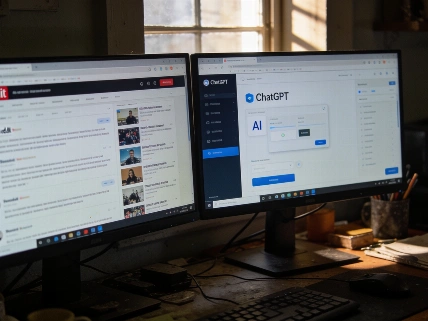
Brands and publishers now have a new tool to assess their presence in AI-powered search results, as the Interactive Advertising Bureau (IAB) has introduced the “Measuring Visibility in the AI Era” framework. Developed by an IAB working group, this framework is designed to help companies understand and benchmark their organic visibility when consumers use AI-based search engines such as OpenAI ChatGPT or Google Gemini to discover products and services.
Caroline Giegerich, vice president of AI at IAB, explained that the framework is intended to give brands and publishers a clear standard for measuring when and how they appear in AI-generated search results. She noted that, unlike traditional SEO or SEM, AI search engines like ChatGPT and Gemini use probabilistic models, which can produce highly variable results for the same query. This variability makes it challenging for brands to track and optimize their visibility, especially in categories where search outcomes can differ widely between users.
The IAB’s new guidelines introduce a two-tiered classification system, allowing brands and agencies to evaluate the reliability of AI visibility data. This helps determine whether the data is robust enough for budget and strategy decisions or better suited for identifying early trends. For publishers, the framework provides standardized metrics for visibility and disclosure, clarifying how AI platforms use their content and when users click through from AI-generated responses to publisher websites. These metrics can also inform licensing discussions and help measurement providers distinguish between accurate and misleading data.
The framework is organized around what IAB calls the “4 P's of AI Visibility”: presence, prominence, portrayal, and persuasion. These categories address whether a brand or publisher appears in an AI response, the prominence of their appearance, the context and accuracy of the mention, and the likelihood of driving user action. The framework currently focuses on organic visibility, with plans to expand into paid media placements and attribution in the future. Giegerich emphasized that starting with organic visibility was necessary due to its complexity compared to paid media.
The working group behind the framework included representatives from search agencies, Walmart’s data-science team, and Microsoft Clarity. Ihab Rizk, senior product manager at Microsoft Clarity, described the initiative as a significant step toward a common measurement language for AI-driven search. Microsoft Clarity’s involvement is notable, as it is one of the few participants that owns a large language model (LLM), providing a unique perspective on AI search measurement.
With more than 20 companies currently offering AI visibility measurement tools-each using different methodologies-the IAB’s framework aims to bring much-needed standardization to the field. This move could help brands and publishers make more informed decisions about their organic search strategies and licensing negotiations. The need for clear, consistent metrics is underscored by the rapid evolution of AI search platforms, as highlighted in related industry developments such as the launch of new generative AI integration tools by other technology providers. For example, recent advancements in generative AI infrastructure have been covered in stories like how developers are streamlining AI model selection for media content.