AI search engines now rely heavily on creator reviews, videos, and social posts to inform their answers. Brands must coordinate across teams to influence citations and sentiment, as earned media dominates AI visibility.
As AI-powered search engines increasingly turn to creator-led content for answers, the influence of reviews, videos, and social posts on brand visibility has never been greater. Large language models (LLMs) lack personal opinions, so they source perspectives from where humans have already shared them-reviews, community threads, editorial articles, retailer pages, and especially creator content.
This shift means that showing up in AI-generated answers is less about producing more branded content and more about orchestrating efforts across teams that manage these diverse sources. According to Tinuiti’s Q1 2026 AI Citation Trends Report, about 82% of AI citations now point to earned media rather than a brand’s own website. Creator content is a rapidly growing part of this mix, with YouTube’s presence in Google AI Overviews jumping from 3.6 million to 36.2 million keywords year over year, reflecting the expanding role of video in AI explanations and validations.
Social platforms’ influence on AI citations varies widely by industry. Tinuiti’s Q2 2026 report found that social platforms accounted for 13% of AI citations for apparel-related queries, but only 3% for over-the-counter health topics. These trends can shift quickly; for example, Perplexity’s share of social media citations dropped from 31% to 13% in just one quarter after reducing Reddit references. The platforms that matter most for each category are constantly evolving, making it essential for brands to research where LLMs are sourcing their information. Relying on a single team to monitor one channel is no longer sufficient.
Traditional search engines have been moving toward this integration of social content for some time. In 2025, Google began automatically adding social media links to Google Business Profiles, surfacing recent brand posts directly on profiles. Google also introduced a short videos block on search results pages and within the search bar, featuring vertical clips under five minutes from platforms like Facebook, YouTube, and TikTok. Semrush data shows that over the past year, YouTube’s estimated organic traffic in the U.S. nearly doubled, making it Google’s largest organic domain, while Facebook and Instagram each saw organic traffic rise by about 60%.
Google continues to expand ways to ingest, display, and measure social conversations, signaling the growing value of social content in search optimization strategies. This trend is reinforced by new research showing that AI search engines most frequently cite platforms like Reddit, YouTube, and LinkedIn. For more on how Google is addressing the authenticity of reviews in search, see this analysis of Google's new guidelines on incentivized reviews.
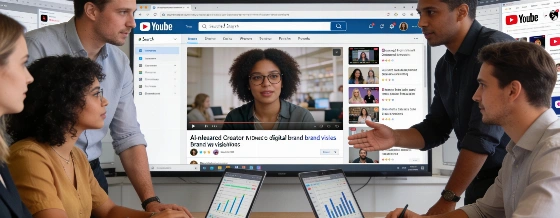
Interestingly, the creator content that wins citations isn’t always the most popular. OtterlyAI’s YouTube Citation Study 2026 found that 94% of cited videos are long-form, and over 40% have fewer than 1,000 views. Well-structured, niche videos-such as comparisons, honest reviews, how-tos, skincare routines, and SaaS tutorials-are more likely to be cited than viral hits. The sentiment expressed in these videos also shapes AI search results. In one case, mid-size creators’ genuine reviews led to their language appearing in branded search citations, with both YouTube and blog content reaching a 0.23% citation share on a target term.
AI search engines favor creator content for its authenticity and lack of overt branding. Attempts to flood search with citation bait can undermine the value of these sources. The most effective teams scale creator content when there’s a meaningful idea or brand story to reinforce, rather than simply chasing reach.
Most organizations still separate influencer and SEO budgets, with each team pursuing different goals. However, aligning these teams around shared objectives and data can reveal which creator content is truly influencing search. Google’s July 2026 update to Search Console now allows brands to track Instagram, TikTok, X, and YouTube content performance in Google Search, including the queries driving traffic. This data enables evidence-based decisions about creator partnerships and content strategy.
Ultimately, creator content is just one piece of the broader narrative AI engines assemble about a brand. When content, PR, commerce, social, affiliate, video, and paid sources reinforce a consistent story, AI models gain a clearer understanding. The opportunity lies in ensuring that wherever AI looks, it finds a unified, authentic brand message.
YouTube, launched in 2005 and acquired by Google in 2006, has grown into the world’s largest video-sharing platform, with over 2.7 billion logged-in monthly users as of 2026. The platform hosts more than 800 million videos and sees over 1 billion hours of content watched daily. Its integration into Google’s search ecosystem has made it a critical source for both organic traffic and AI-driven search results, further cementing its influence on digital discovery and brand visibility.