
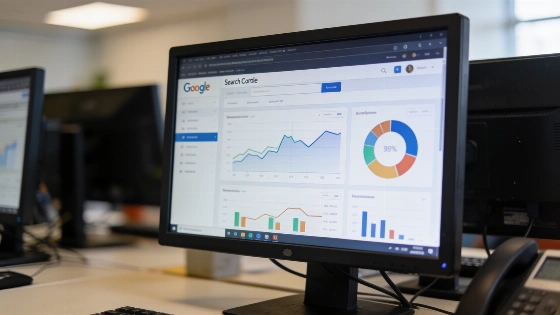
Google has launched “platform properties” in Search Console, giving website owners and people who market or create content new visibility into how posts from social media, TikTok, X, and YouTube appear in Google Search and Discover. Introduced in July 2026 and reported as globally available later that month, the feature extends Search Console beyond conventional websites. Account owners can examine how Google users discover social and video content.
Previously, Search Console reported website impressions, clicks, and queries but offered no dedicated view of performance for social and video accounts. The new properties show which Google searches lead users to supported posts and videos, alongside impressions and clicks, as well as search queries and traffic trends. Each account is reported separately, rather than being combined into a single social-performance report.
Industry voices have called the update impressive for the “social media SEO world.” Annie-Mai Hodge, founder of Girl Power Marketing, described it as a major step for creators, while social media manager Samra Tyagi called it the “Social SEO update of the year.” The reports can help marketers identify search terms gaining traction and spot content attracting visibility through Google. These industry assessments are commentary, not measured market-impact figures.
The platform properties feature has three basic reporting areas. Performance covers clicks and impressions, along with queries and content-level results, and includes filters for examining individual posts or URLs. Insights highlights recent traffic patterns and top-performing posts, and shows how audiences discover an account through Google. Achievements tracks Google-traffic milestones, including click thresholds reached over a 28-day period. The structure follows familiar Search Console reporting, with results separated by supported account.
Moshe Samet, product manager lead for Search Console, said Google Help Center guidance can help creators interpret metrics for different content and search interactions. A social post appearing in Google Search can count as an impression even if a user does not click it. A click is recorded when the user clicks through. Video content appearing in Search or Discover is measured in the same Google-side context. These figures describe exposure and clicks on Google surfaces, not native platform measures such as social media likes, TikTok watch time, or YouTube subscriber growth. Further details are available in the Search Console Help Center.
To view data, account owners add each supported profile as a separate property and verify ownership. Profiles claimed previously may already be available. Reports can be selected for an individual account, with URL-level filtering for supported content. Charts may remain empty until a property is added, and performance data can take several days to populate after setup. Only data collected after the property is created is shown.
Publishers have increasingly sought unified analytics to understand cross-platform performance, especially after shifts in Google referral traffic. For example, Hello! Magazine recently rebuilt its audience by integrating data from multiple platforms to regain growth after a drop in Google traffic.








