
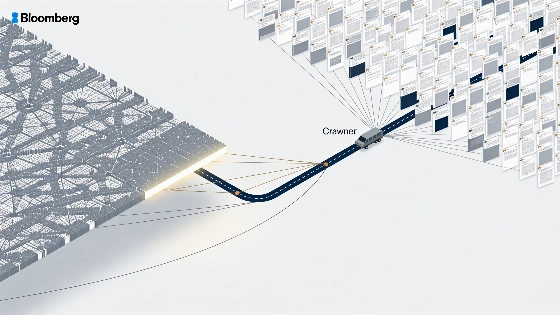
A washing-machine manual or a page listing current passport fees may draw visitors without attracting many links. Cloudflare says those pages helped show how network traffic signals could guide OpenAI’s crawler toward useful material that link-based discovery can miss.
The research pilot began in July 2026 and covered a participating cohort representing roughly 1% of Cloudflare’s network. In results announced on October 15, Cloudflare and OpenAI said the work helped OpenAI discover and index hundreds of millions of previously unknown pages for ChatGPT Search. They did not disclose an exact count. The companies described the results as early findings from the pilot, rather than a fully documented production system, in their pilot announcement.
What the signals do
Cloudflare can see whether pages receive traffic, have changed or lead nowhere, then provide OpenAI with distilled web metadata for discovery. The companies say this is metadata for search, not page content supplied for model training. Signals can help a crawler prioritize a fresh page or avoid repeated requests to dead URLs and duplicate content. Cloudflare provides discovery signals; OpenAI independently evaluates and ranks the pages it finds for relevance and helpfulness.
Cloudflare also described testing page-level safety signals. A fake login form on one page of an otherwise legitimate site, for example, could be excluded without blocking the entire area. Early results suggest the signals can help identify pages to leave out of an index.
Discovery does not override publisher controls. A page that blocks OpenAI’s search crawler remains blocked, and OpenAI independently evaluates and ranks pages it discovers. Indexing also does not guarantee that ChatGPT will cite a page in an answer.
The limits matter for publishers. The companies have not reported which sites participated, how often newly indexed pages appeared in answers or how much referral traffic they generated. Cloudflare acknowledged that discovery could initially increase crawling while pages are evaluated. Server logs may show more OpenAI crawler visits before publishers see any referral benefit.
API costs and controls
Cloudflare’s Web Search API entered beta on October 2, 2026, through AI Gateway. The API gives applications a way to query the live web; it is separate from the pilot, which tested network signals to help OpenAI discover pages. Cloudflare adds no markup to provider list prices, and developers can bring their own provider basic. Ceramic.ai costs $0.25 per 1,000 requests; Linkup costs $5.00; Exa costs $7.00. At one million monthly requests, those rates range from $250 to $7,000. Cloudflare has published no benchmark comparison, so the cheapest option cannot be assumed to produce the best results.
The three launch providers support Zero Data Retention for requests through Cloudflare. They have also committed to identifying themselves, respecting robots.txt and returning source links. OpenAI’s API pricing page, updated October 23, lists web search at $10 per 1,000 calls, with search-content tokens free; ordinary model-token charges still apply. That figure is based on a single source and should be checked before budgeting. ChatGPT subscriptions do not include API search credits.
Cloudflare’s separate Verified Bots program assesses behavior as well as identity. Bots sign requests using Web Bot Auth, and BotBase records them in an open catalogue. The trust band is meant to show how consistently a bot follows site preferences; Cloudflare says it is not a permanent judgment of the bot or its operator.
The first checks examine robots.txt compliance and whether a bot slows down after an HTTP 429 response. Repeated disregard for site rules can lower trust, while reducing or pausing traffic after a 429 can improve it. As of October 24, Cloudflare had not published scores or a scoring rubric. Public reporting on Cloudflare Radar and customer-set thresholds were planned but had not shipped.
Publisher settings
OpenAI operates separate search and training crawlers. Allowing OAI-SearchBot while blocking GPTBot keeps pages eligible for ChatGPT Search and signals that crawled content should not be used for training. Blocking OAI-SearchBot excludes pages from search results, although links may still appear as navigational links; allowing GPTBot can still permit training collection.
OpenAI recommends allowing OAI-SearchBot and its published search-bot IP addresses for ChatGPT Search eligibility. Cloudflare’s AI Crawl Control is available on every plan and lets site owners see and allow or block AI crawlers. The distinction between search access and training access gives publishers a specific control, though it does not guarantee visits or citations.
Cloudflare says it intends to make discovery signals more widely available during the rest of 2026, without setting a date. AI Search usage-based billing was scheduled to begin November 1, 2026. Its broader AI infrastructure work also includes a document-extraction preview on Workers AI.








