
Ahrefs based its October traffic figures on 118,671 sites using its free web analytics tool. In that sample, ChatGPT accounted for 0.36% of tracked website traffic, while Google sent far more visitors, according to Damon Burton, founder and president of SEO National®.
That figure measures visits to websites. OpenAI's estimate, by contrast, measures activity inside ChatGPT: at an OpenAI-hosted event in New York on November 2, 2026, ChatGPT consumer product lead Adam Fry said its volume of search-like queries was roughly one-fifth Google's. Fry defined a search as a prompt that leads ChatGPT to search the web, rather than every ChatGPT message. Big Technology published its account of the discussion on November 3. The comparison describes activity under OpenAI's definition, not a 20% share of the global search market; OpenAI did not identify the Google baseline, comparison period, geographic scope or calculation. The reported New York discussion included queries on subjects such as people, places, current events, finance and health. A separate Ahrefs estimate put ChatGPT search activity at about 12% of Google's volume using a different methodology, as DeepLearning.AI reported. These figures count different things and cannot establish how many ChatGPT users visit a particular business's site.
Burton, whose Salt Lake City SEO agency serves clients nationwide, advises businesses to track AI search activity alongside website referrals. The distinction echoes the measurement gap discussed in a related SEO analysis, which examined search visibility that does not necessarily produce a site visit.
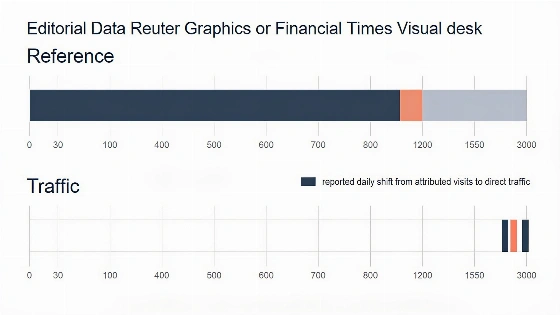
A tracking glitch exposed how referral reports can miss visits even as people keep clicking. Around Oct. 9, links in ChatGPT answers reportedly stopped carrying the UTM label that identifies ChatGPT as a traffic source. A UTM tag is a short code added to a link so analytics tools can record where a visit came from.
Adobe analyzed roughly 500 webpages that received at least 5% of their traffic from ChatGPT. On those pages, visits attributed to ChatGPT fell by about 31,000 per day as traffic classified as direct rose by roughly 26,000 daily visits. Relevant Audience reported that Adobe later said OpenAI had confirmed the missing label resulted from a bug. Clicks carrying the UTM parameter had returned to previous levels by Oct. 15.
A separate audience figure cited by Big Technology put ChatGPT's weekly users at 1.2 billion after an increase of 200 million over two months, from approximately 1 billion. Weekly users are not the same measure as searchers or people who click through to external websites. Burton said that growth makes it more important for businesses to understand how AI platforms fit into their search strategy.
Businesses evaluating an SEO company can ask how its reports separate AI referrals from organic search, then check where direct visits are classified. Industry analysts recommend marking platform changes in analytics reports so abrupt shifts can be interpreted in light of when they occurred.








