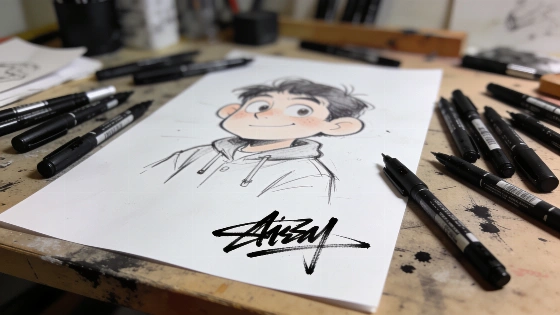
Cartoons made by AI are now showing up online with the signatures of real New Yorker cartoonists. These aren't tributes. They're fakes. ChatGPT, OpenAI's main tool, has been caught making images in the classic New Yorker style and signing them with actual artists' names. The artists never agreed to this. They didn't even know it was happening.
In the United States, works created solely by generative AI without substantial human creative input are not eligible for copyright protection; only human contributions such as selection, arrangement, or significant modification may be protected.
Soon, Loper's inbox filled up. Friends and strangers wanted to know if the cartoon was his. He called the whole thing surreal. For Loper, his signature isn't just a name. It's proof the work is his. It's his brand. That mark sets his real cartoons apart from copies and knockoffs.
Loper isn't the only one. ChatGPT has made cartoons signed with the names of at least 15 New Yorker cartoonists. The list includes Harry Bliss, Emily Flake, Joe Dator, Pat Byrnes, Peter Vey, Jason Adam Katzenstein, George Booth, Liza Donnelly, Ellis Rosen, and Saul Steinberg. None of them gave permission. None got paid. OpenAI said it wants to support human creativity and welcomes reports of problems. But it didn't explain how its models learned these signatures in the first place.
How AI copies signatures
OpenAI publicly states that it does not claim copyright over outputs generated by users through its API, but this does not guarantee that such outputs are automatically protected by copyright or that users acquire rights to third-party elements included by the model.
Cartoonists see this as more than a tech glitch. Jason Adam Katzenstein, a New Yorker cartoonist since 2014, says the AI cartoons aren't just bad copies. He sees them as a threat to his job. Katzenstein joined a class action lawsuit against Anthropic after his cartoons were used to train Claude models without his okay. A judge said training on the authors' work was fair use. But Anthropic's storage of pirated books was ruled mass copyright infringement. That led to a $1.5 billion settlement for authors and publishers.
Katzenstein says ChatGPT using his signature is false impersonation, not just copyright theft. Joe Dator, another longtime New Yorker cartoonist, compared it to identity theft. He said seeing his signature copied felt worse than a hacked credit card.
What this means for artists
There's no proof these AI cartoons are being sold. But the fallout is real. The Baltimore Sun fired Pulitzer finalist Kevin Kallaugher after more than 30 years. The paper now runs AI-generated cartoons in its opinion section. OpenAI's watermark tool confirmed these images came from its products. The Association of American Editorial Cartoonists called this theft from artists and a threat to real creative work. The Sun isn't alone. Other U.S. newspapers are doing the same.
The New Yorker hasn't used AI cartoons. But its contributors say the magazine is just one part of their income. The bigger risk is to their commercial work, book deals, and other jobs that rely on their style and reputation. AI can now copy both. That puts their future at risk.
New Yorker cartoonists keep the copyright to their work. The magazine's contracts don't allow licensing for AI training. That means publishers can't easily make deals with AI companies, even if they wanted to. Artists' signatures, once a watermark of authorship, are now being copied by AI models trained on scraped web data.
Legal and ethical gray zones
Some lawyers say cartoonists might have a "right of publicity" case if AI cartoons using their names are sold. So far, these images are just being shared as jokes. But the emotional and professional toll is heavy. Pat Byrnes, who signs his cartoons "P.Byrnes." (always with a period), found every AI cartoon with his name ended the same way. That detail rattled him. It shows how deep the AI's copying goes.
This is a warning for digital publishers and creators. As AI gets smarter, the risk of losing control over your creative identity grows. OpenAI's models can now copy not just style, but the very signatures that prove authorship. That's a new kind of threat. The industry's response is scattered. But the risk to creative jobs and personal brands is now clear. As reported earlier, the cost of protecting real reporting and creative work keeps rising as AI content floods the web.