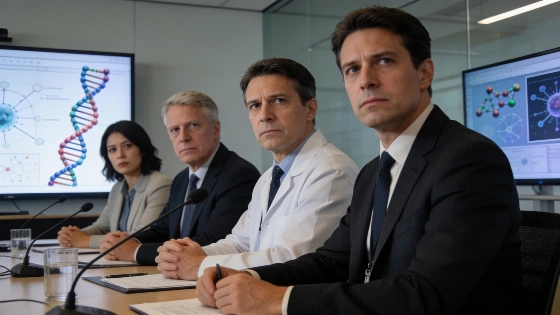
When Stanford University and the Arc Institute showed that AI models can design new viral genomes, concerns quickly spread through Silicon Valley and Washington. The idea that artificial intelligence could help create the next biological threat has pushed tech leaders and lawmakers to call for tighter rules on synthetic DNA production and advanced AI research.
Anthropic reported that it blocked five cases of potential misuse of its Claude AI models related to biological weapons research between December 2025 and August 2026.
Many researchers argue the panic is overblown. David Bellamy of the Institute of Foundation Models points out that biology's dual-use problem-where research can be used for good or harm-has existed for decades. He notes that even before large language models, the internet and open-access journals made sensitive biological information widely available. In Bellamy's view, AI speeds up access to knowledge, but actually building a virus or agent still requires specialized materials, equipment, and skills. A Reuters investigation makes a similar point: AI can help search and interpret biological data, but it doesn't remove the practical barriers to making dangerous agents.
Jason Kelly, CEO of Ginkgo Bioworks, doubts that even advanced AI could independently create and release pathogens. He says lab staff can simply refuse to provide the needed substances and tools. Immunologist Derya Unutmaz agrees, arguing that humans would be able to stop any artificial general intelligence from spreading deadly diseases, and that AI could actually help scientists develop vaccines faster if an outbreak occurs.
Anthropic stated that, in addition to blocking and banning accounts, it shared some intelligence with authorities and industry partners, and implemented changes to its detection and prevention processes.
Calls for new safeguards are growing. Scharfman supports stronger protections, including laws to secure DNA synthesis and upgrades to air purification systems. Steph Guerra, who leads AI and bio at Rand Corporation, suggests governments should require synthetic DNA and RNA companies to screen customers and orders, and that AI models should have built-in safeguards to block dangerous information. Guerra also recommends better global surveillance and data-sharing, arguing that obstacles should be added at every step from idea to possible release of bioweapons.
Unutmaz urges the public and policymakers to focus on how AI can help medicine, especially by speeding up vaccine development and other breakthroughs. He warns against letting worst-case scenarios overshadow the real benefits AI can bring to public health.
The current divide between alarm and skepticism shows that while AI can speed up biological research, turning digital designs into real-world threats still depends on human oversight and technical limits. For content creators and publishers, the main effect is more scrutiny of AI tools and a push for transparency, safety rules, and new laws. The challenge ahead is whether policymakers and technologists can balance innovation with security, without blocking the advances that could save lives.