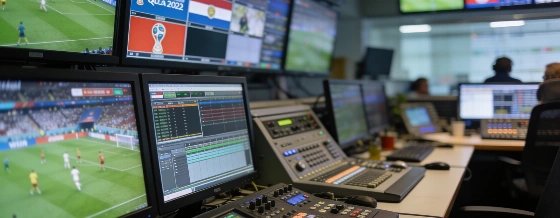
Advertisers face new challenges as the 2026 World Cup pushes programmatic live sports beyond reach and into measurable outcomes. Rising CPMs and fragmented budgets force brands to rethink campaign strategies.
The 2026 World Cup is shaping up as a critical test for publishers, advertisers, and media buyers invested in programmatic live sports. Following the 2024 Paris Olympics, which demonstrated that premium live sports inventory could be sold programmatically at scale, the World Cup now challenges the industry to prove that spend can deliver measurable value as costs rise and budgets become more fragmented.
Data from the Paris Olympics showed that programmatic channels could meet advertiser demand for live sports. NBCUniversal reported $1.2 billion in ad revenue, with $350 million from first-time Olympic advertisers-many likely using programmatic buying. On Peacock, 70% of advertisers were new to the Games, and the total advertiser count surpassed both the Tokyo and Rio Olympics combined. Top programmatic advertisers achieved incremental reach of 94% to 96% compared to other ad-supported streaming, and NBCUniversal said it reached 40% more intended households with 28% greater efficiency.
However, the World Cup is testing whether this reach translates into business results. With streaming CPMs ranging from $60 to $120 and hydration-break ad slots estimated at $65 to $100, advertisers are demanding proof that their investment drives outcomes, not just audience numbers. Most brands are integrating World Cup inventory into broader omnichannel campaigns, using linear and premium streaming for attention, while mobile, web, retail media, social, and programmatic channels extend engagement throughout the customer journey.
This complexity raises new measurement challenges. A viewer might see a brand during a match, search for it later on mobile, encounter it again in a retail media environment, and finally convert days after the initial exposure. The value of a live impression often emerges through a sequence of touchpoints, making it essential for advertisers to connect these signals across platforms.
To address this, outcomes measurement is moving from a performance team specialty to a core business requirement. For World Cup campaigns, measurement must be built into planning from the start. Advertisers are advised to define the role of each channel before buying, select the right measurement method for each decision, design incrementality tests in advance, allow enough time for CTV and livestreaming responses to appear, and connect exposures to actions across screens. Without this discipline, the impact of live buys may appear disconnected from conversions, and channels closer to the point of sale could receive disproportionate credit.
Brands are also looking at how large-scale campaigns can drive engagement beyond traditional media. For example, Unilever’s World Cup strategy mobilized 50,000 creators and pop-up events to boost earned media and brand engagement, as detailed in this report on Unilever’s World Cup campaign.
Ultimately, the World Cup’s high visibility and cost mean advertisers cannot treat it as a one-off media moment. Instead, it is an opportunity to understand how premium reach can drive value throughout the customer journey and inform future media investment decisions.
NBCUniversal, a division of Comcast Corporation, has consistently invested in expanding its programmatic capabilities for live sports. The company reported that its streaming platform Peacock reached over 30 million paid subscribers by early 2026, reflecting the growing demand for digital live sports experiences. NBCUniversal’s ad-supported streaming offerings have become a key driver of revenue growth, with live events like the Olympics and World Cup serving as major tentpoles for both audience engagement and advertiser interest.