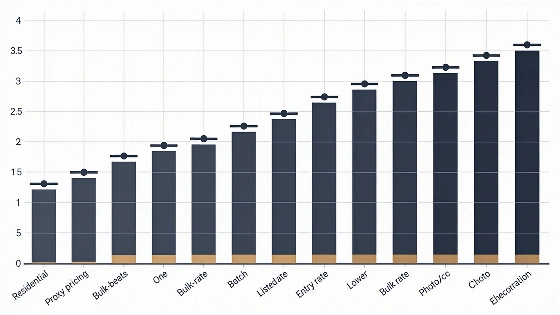
Rayobyte lists residential traffic at $0.70/GB after 1,000 GB, while Bright Data’s pay-as-you-go rate is $8/GB. October 2026 pricing comparisons put residential proxy traffic across the reviewed vendors at roughly $0.49 to $8 per GB, with observed datacenter examples around $0.30 to $0.60 per GB. That price gap reflects a market where location can matter as much as proxy-pool size.
A keyword ranking third in Manchester may land on page two in Leeds. Google also adjusts results information from the searcher’s device and language, so a check from one office connection cannot represent every local search. Repeated automated queries from the same IP can bring CAPTCHAs or a block. Google’s Search spam policies identify automated queries and scraping search-result pages as prohibited behavior. Using residential IP rotation does not change that policy; teams should distinguish permitted API access from direct automated requests to Google Search.
What SEO teams need
Residential proxies route requests through home connections assigned by internet service providers. Search engines see traffic that appears to come from an ordinary user in a specific location. Agencies use the proxies for localized rank checks and larger-scale monitoring; data center IPs cost less, but search engines can recognize their address ranges quickly. Residential addresses are associated with consumer access networks, while datacenter proxies originate from hosting infrastructure. The category also includes different models: some residential addresses come from participating user devices, while ISP proxies are hosted on infrastructure but registered as residential. Address type alone does not establish that a request is authorized.
Location controls shape the buying decision. Country targeting is a baseline, while city or postcode options matter for local audits. Teams should also check billing terms, expiration rules for unused traffic, and whether a provider supports rotating and sticky sessions. A Singapore agency comparison shows how SEO needs vary; proxy selection adds another operational choice to that mix.
Networks and SERP tools
Bright Data reports a residential network of more than 400 million IPs across 195 countries, with city-level and US ZIP code targeting. Its dedicated SERP API returns parsed search results for teams that prefer them to raw pages. Pay-as-you-go traffic is listed at $8/GB, and monthly plans start at $499. October 2026 pricing comparisons also listed a promotional rate of $4/GB, distinct from the standard pay-as-you-go price. Bright Data’s Web Unlocker, Crawl, and SERP API products are separate from raw residential bandwidth, so API charges should not be treated as proxy-per-GB pricing.
Oxylabs has more than 100 million residential IPs and supports targeting by country, state, city, and ASN. October 2026 comparisons put its residential traffic at $6/GB on a lower-volume tier and $2.50/GB above 1,000 GB; monthly credit plans were listed at $30, $100, and $500. The Web Scraper API can return structured Google results, reducing the parsing work required by an in-house tracker. Its API pricing is separate from the cost of raw proxy bandwidth.
Decodo’s pool exceeds 115 million IPs across more than 195 locations. Pay-as-you-go traffic costs $4/GB; the rate falls to $2/GB on its 1 TB enterprise plan. A SERP scraping API is also available, and a three-day trial includes 100 MB.
Flexible pricing
DataImpulse charges $1/GB for residential traffic, with the rate dropping to $0.80/GB on the 1 TB plan. Its more than 90 million IPs cover 195 locations. Country targeting is free, city targeting costs extra, and unused traffic never expires-a useful term for teams whose checks follow irregular schedules.
SOAX offers targeting by country, region, city, carrier, or ISP. Its Sandbox tier has no subscription and charges $5/GB for top-tier countries such as the US. Paid plans begin at $200 per month, reducing that rate to $3/GB or less.
IPRoyal says it has more than 64 million IPs across 195 countries, and its traffic does not expire. Rates start at $7.35/GB for a single gigabyte, then fall to $1.84/GB on custom plans starting at 10 TB. Infatica provides access to a pool of more than 45 million IPs on every residential plan. Pay-as-you-go traffic costs $4/GB; packages start at $96 for 25 GB and reach $2.60/GB at 1,000 GB. Its seven-day trial costs $4.
Lower-cost options
Webshare’s rotating residential proxies start at $1.40/GB, with custom plans that let customers choose their bandwidth. A free plan includes ten data center proxies for early testing. Rayobyte draws IPs from more than 50 million opted-in devices each month across more than 190 countries; its pay-as-you-go rate starts at $3.50/GB and drops to $0.70/GB past 1,000 GB.
Proxy-Seller offers residential, mobile, ISP, IPv4, and IPv6 proxies under one account. Residential pricing starts at $3.5/GB and falls to $1.45/GB after 1 TB.
Provider choice does not guarantee accurate results. Match each request to the city being measured and set the language and country parameters in the search URL. For permitted data collection, use rotating sessions where appropriate; Google’s policy against automated queries to its Search pages applies regardless of whether requests come through residential proxies.