Most AI funding flows to giants, but real value lies deeper. One founder explains why technical breakthroughs—not quick products—will shape the future. Here’s what investors often miss.
When I launched Safe Sign Technologies, I was a 21-year-old law student in the U.K., collaborating with researchers from Cambridge, DeepMind, Harvard, and MIT. Our mission: push the boundaries of AI for legal reasoning. Despite publishing papers that placed our model among the world’s best, and training it with far less capital than major labs, investors kept asking about product traction—not the science.
After 20 months, Thomson Reuters acquired Safe Sign Technologies—their first-ever pre-revenue acquisition in 170 years. They bought us for our scientific breakthroughs, not for a finished product. Yet, the journey was tough. U.K. investors passed, and most of our funding came from the U.S. The prevailing wisdom was that science only mattered once it was attached to a product. I disagreed then, and I believe that mindset is even riskier now.
Today, as an angel investor, I look for founders tackling foundational AI challenges. In early 2026, foundational AI startups raised about $178 billion, but nearly all of it—97%—went to incumbents like OpenAI, Anthropic, and xAI. This concentration tempts new founders to build on top of these giants, but that’s a dangerous shortcut. Application-layer startups, built on someone else’s models, are at the mercy of upstream pricing and access. The real opportunity is in solving the hard problems beneath the surface: efficiency, reliability, interpretability, and safety.
Founders who focus on training efficiency, model architecture, and inference costs are building the infrastructure that will matter years from now—long after most wrappers are gone. The questions I ask AI founders are direct: Is your technical team as strong as DeepMind’s? Are you solving a core system problem, or just stacking features on existing models? Will your product become indispensable over the next five years, or are you chasing early revenue?
Some of the most important AI companies—like DeepMind and OpenAI—started as research projects with no obvious product. They looked unfundable at first, but their foundational work became essential. Don’t build to look fundable this quarter. Build what the entire stack will depend on in the future. Hire the best team, and tackle the hard, foundational problems while they’re still overlooked.
The deep-tech capital market moves slowly and favors familiar names, but the real breakthroughs come from those willing to do the hard work early. As explored in our coverage of regulated industries’ unique AI needs, balancing innovation with accountability remains a challenge—and foundational advances are key to that balance. The future of AI lies in deep tech, not in surface-level applications that can be easily replaced.
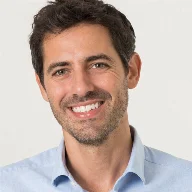
Alexander Kardos-Nyheim was founder and CEO of Safe Sign Technologies, acquired by Thomson Reuters in 2024. He is now an angel investor and senior director at Thomson Reuters Labs. Illustration by Dom Guzman.